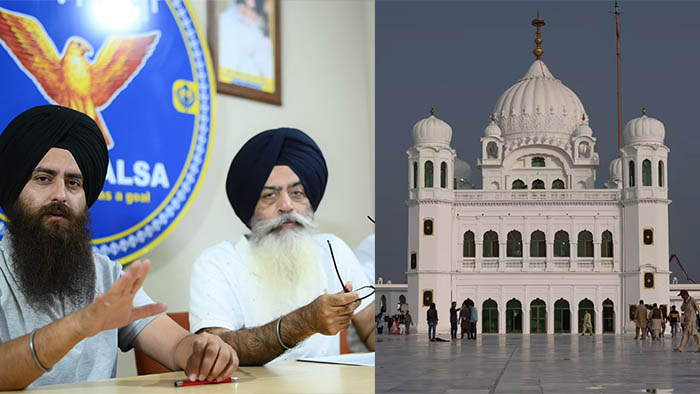
CHANDIGARH: A serious debate and profound controversy have erupted within Sikh circles regarding the “Jagat Jot Sri Guru Granth Sahib Satkar (Amendment) Act 2026,” recently enacted by the Punjab government. Framed under the premise of enforcing strict punishments against culprits who commit sacrilege and disrupt the reverence of Sri Guru Granth Sahib Ji, the legislation is facing severe objections from various segments of the Sikh community.
While the Shiromani Gurdwara Parbandhak Committee (SGPC)—which originally passed a resolution in its general house to have the Punjab Assembly enact the foundational law namely Jagat Jot Sri Guru Granth Sahib Satikar Act 2008—and the acting Jathedar of Sri Akal Takht Sahib, Giani Kuldeep Singh Gargarj, are currently objecting only to specific clauses in the Aam Aadmi Party (AAP) government’s 2026 Amendment and seeking modifications, a divergent and stronger consensus is emerging elsewhere.
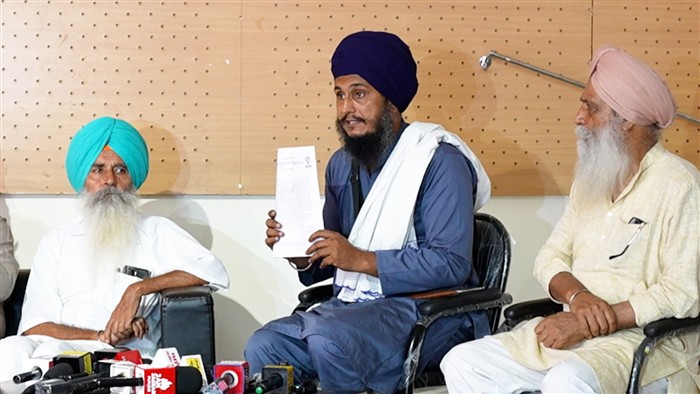
During a press conference held at the Kendri Sri Guru Singh Sabha on May 18, a coalition of Sikh scholars, legal experts, lawyers, former judges, and thinkers unequivocally demanded the outright repeal of both the 2026 Amendment Act and the original 2008 Act.
Prominent Voices Against State Interference
The panel of experts criticized the SGPC for ignoring and setting aside the process of Khalsa Panth’s Gurmata regarding the printing of Sri Guru Granth Sahib birs/saroops. They argued that relying on a secular government to enact the 2008 Act was a foundational error, which has now left the SGPC in the awkward position of protesting the government’s subsequent amendments.
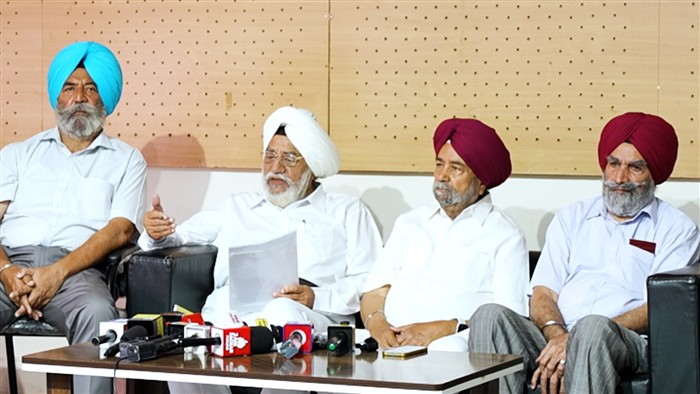
Key figures present at the conference included S. Gurpreet Singh (Institute of Sikh Studies), Dr. Khushal Singh and Prof. Sham Singh (President, Kendri Sri Guru Singh Sabha), Senior Advocate Puran Singh Hundal, Justice (Retd.) Nirmal Singh, Bhai Ashok Singh Bagri, Prof. (Retd.) Davinder Singh Mohali, Former IAS S. Gurtej Singh, Senior Journalist Jaspal Singh Sidhu, and Paramjit Singh Gazi (Editor, Sikh Siyasat & Former National President, Sikh Students Federation).
Key Arguments Presented:
Rejection of Government Intrusion
Initiating the press conference, S. Gurpreet Singh emphasized that although segments of the Sikh community previously urged the government for the law, it must be firmly rejected today as it represents direct state interference in Sikh religious affairs and Maryada (code of conduct). He asserted that the Khalsa Panth is fully capable of independently resolving matters related to Guru Granth Sahib Ji.
Legal Alterations via the ‘Backdoor’
Advocate Puran Singh Hundal pointed out that the Punjab government’s Amendment Act drastically alters the 2008 Act, going so far as to change its fundamental preamble. He accused the government of introducing these unacceptable clauses through the “backdoor.”

Complications of Legal Proceedings
Justice (Retd.) Nirmal Singh warned that initiating legal proceedings in matters concerning the reverence of the Guru Granth Sahib would spawn new complications, ultimately hindering rather than helping the cause. He urged the Akal Takht Jathedar to advocate for the repeal of the original 2008 Act, not just the 2026 Amendment.
The Limits of a Secular State
Former IAS officer S. Gurtej Singh and Prof. Davinder Singh Mohali echoed a shared fundamental perspective: a secular state lacks the jurisdiction to legislate on matters of religious faith and Maryada.
The authority of any government does not apply to the Guru Granth Sahib. Therefore, an Act that binds the Guru Sahib within a legal framework should never be accepted by Sikhs, said S. Gurtej Singh and Prof. Davinder Singh Mohali.
Bhai Ashok Singh Bagri reminded attendees that the Sikh Maryada was established after extensive deliberations involving global Sikh populations, including those in the US and Malaysia. He asserted that no government or court has the right to interfere with this established code, urging the community to overcome internal weaknesses and build self-reliance. Similarly, Prof. Sham Singh noted that thinkers at the Kendri Sri Guru Singh Sabha had opposed the legislation from the moment the AAP government proposed it.
Historical Warnings and Future Implications
Reflecting on past foresight, Parmjeet Singh Gazi cited letters sent in 2007 to Sri Akal Takht Sahib, the SGPC, and Sikh organizations.
The 2007 Warning: Parmjeet Singh Gazi revealed that his organization had warned against seeking government legislation for religious reverence, predicting it would open the floodgates for future administrations to draft laws contrary to Sikh interests.
A Flawed Current Approach: He criticized the SGPC and Giani Kuldeep Singh Gargarj’s current strategy of merely requesting minor modifications to the 2026 Amendment, arguing that accepting any version of the state law solidifies government interference in Sikh internal affairs.
The Proposed Solution: He called for a renewed effort to reinstate the Sarbat Khalsa and the Gurmata tradition to resolve these issues organically.
Adding historical context, senior journalist Jaspal Singh Sidhu observed that the root of governmental interference in Sikh affairs traces back to the Sikh Gurdwaras Act 1925, a reality the community must deeply reflect upon.
This press conference has introduced a critical perspective into the ongoing debate regarding the new Amendment Act: the very inception of the 2008 Act was a fundamental mistake.
The pivotal question that remains is whether the SGPC and Giani Kuldeep Singh Gargarj will heed the advice of these Sikh scholars, legal experts, and thinkers, or if they will disregard timely counsel—just as they did in 2008—and proceed down a path that risks further religious and legal turmoil in the future.