
The political changes that have taken place in India over the past decade have brought this region into a sensitive and fragile phase. The rise of the BJP in 2014 emerged as a significant transformation. The transfer of power into the hands of the RSS and BJP is regarded as an indication of the acceleration of the agenda to transform India into an “Akhand Bharat” and a legally defined Hindu Rashtra.
To achieve this objective, efforts are ongoing to fully integrate Kashmir, Punjab, and the southern and northeastern regions into the State framework—regions that have historically resisted State policies. The consequences of this campaign are becoming increasingly serious, and tensions within India’s internal politics are also rising. These tensions are no longer confined to traditional boundaries but are now visible even among sections previously considered strongholds of Indian nationalism. The centralization of power and attempts to impose cultural uniformity have further intensified movements for regional autonomy, linguistic identity, and self-determination. In this context, the need for mutual support, unity, and coordination among different regions has increased significantly. Punjab has now come to occupy a central position within an important geopolitical environment. Developments such as aerial confrontations between India and Pakistan, and actions such as the unilateral suspension of the Indus Waters Treaty, indicate the growing instability in this region. The tensions between these two nuclear-armed states are not merely limited to border skirmishes but could evolve into situations directly affecting land, water, and populations.
At the same time, increasing geopolitical tensions between the United States and China, along with large-scale economic projects, have turned this region into a focal point of rivalry among major powers. These projects are not limited to infrastructure development alone but serve as instruments for reshaping trade routes and strategic alliances.
Any conflict occurring in this region could affect not only local economies but also global trade and political structures. At the global level, the international order is increasingly becoming multipolar, where the United States is no longer the sole dominant power. NATO countries and Western states are attempting to expand strategic and economic partnerships with India in order to balance the growing influence of China. Ongoing trade negotiations between India and Western countries indicate this trend.
In this context, the position of the Panth and Punjab is becoming increasingly significant within the broader framework of global politics. The issue is no longer confined to local political conflict but has become connected to global transformations.
These circumstances create opportunities, but they also generate significant challenges and risks. Therefore, the need for effective leadership, strong organization, and clear strategic direction has become even more critical.
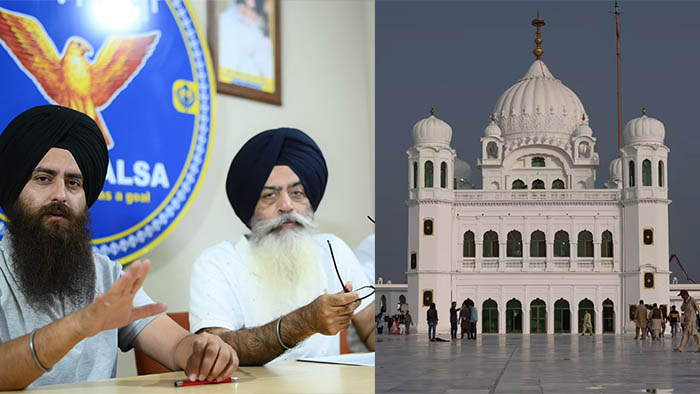
Keeping all this in view five Sikh organizations in Punjab have released a joint policy document. In this exclusive interview, journalist Mandeep Singh talks to Bhai Parmjeet Singh Gazi, spokesman of Panch Pardhani Jatha, to discuss various aspects of the policy document.