
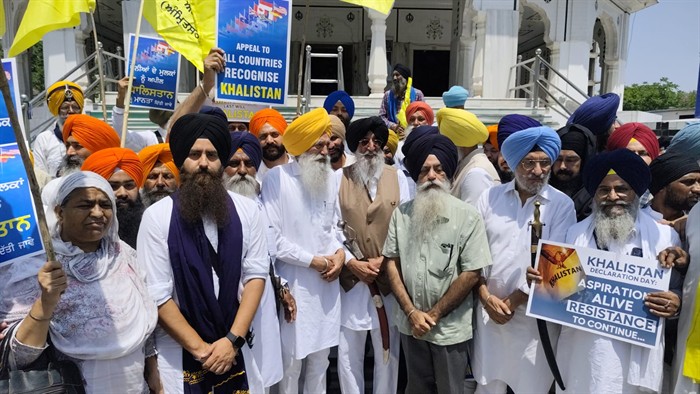
Sri Amritsar: The 40th anniversary of the April 29, 1986, Khalistan Declaration was jointly commemorated yesterday by four Sikh organizations on behalf of the Khalsa Panth and Gur-Sangat at Sri Amritsar.
On this occasion, a joint policy document titled “Khalistan: Vision, Legacy, and Future” was released by Dal Khalsa, Panch Pardhani Jatha, Akal Federation, Shiromani Akali Dal Amritsar, and the Jathedar Jagtar Singh Hawara Committee.
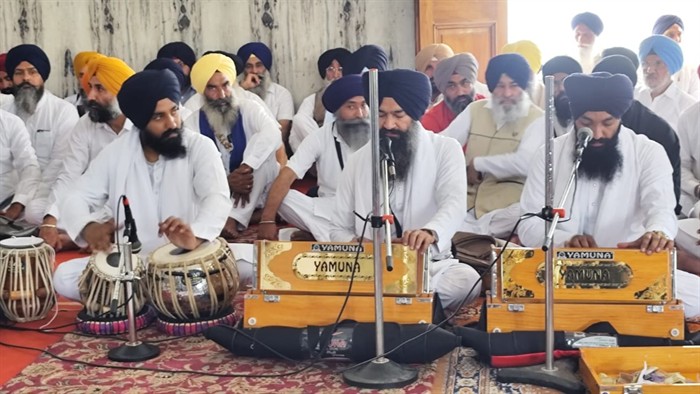
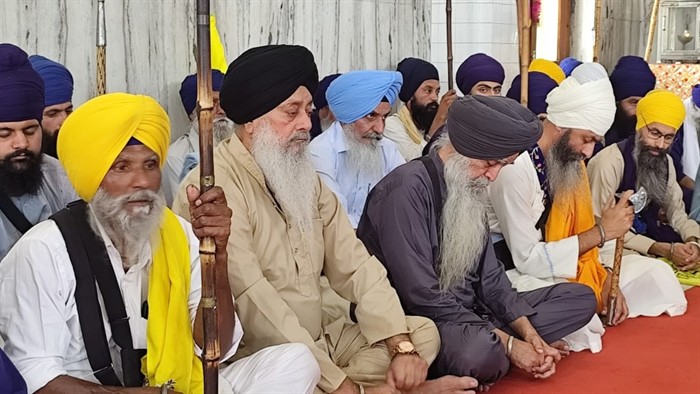
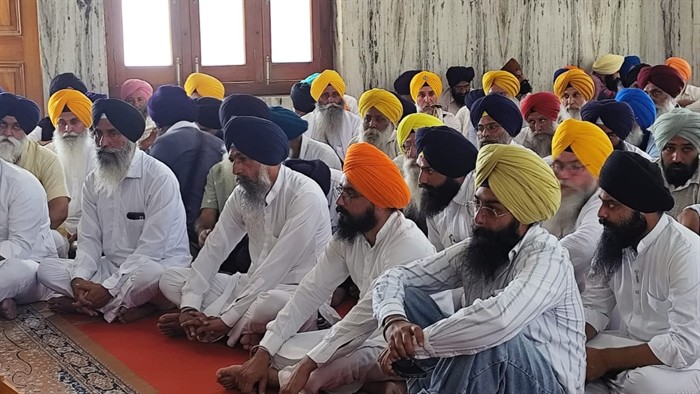
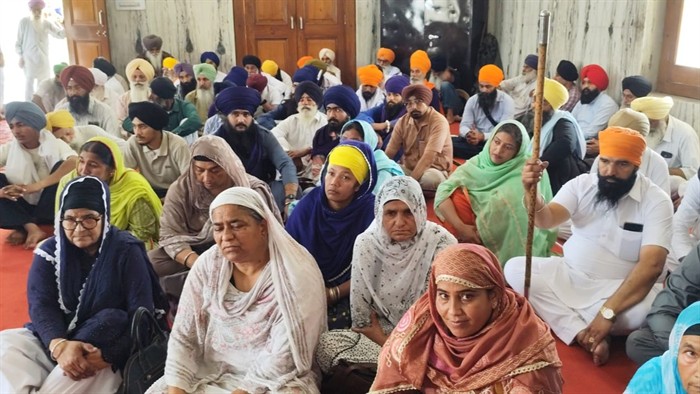
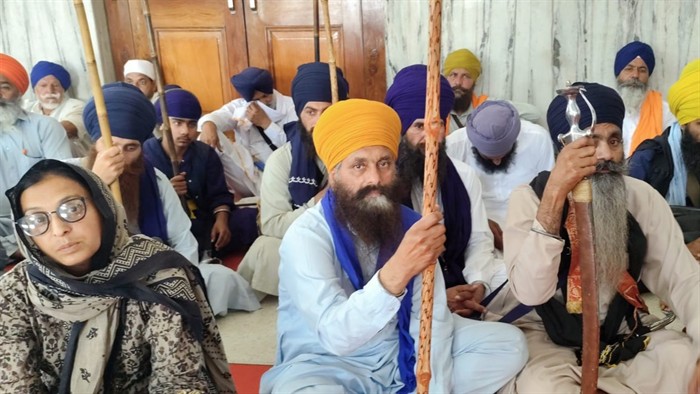
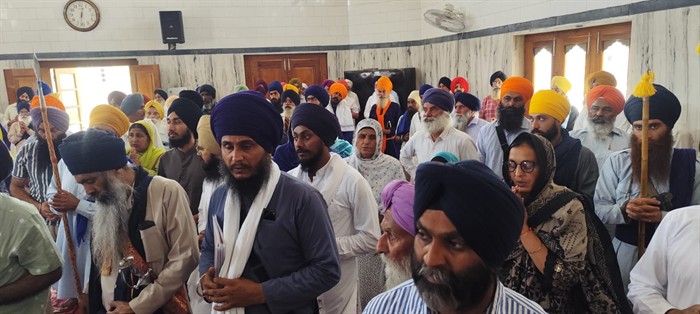
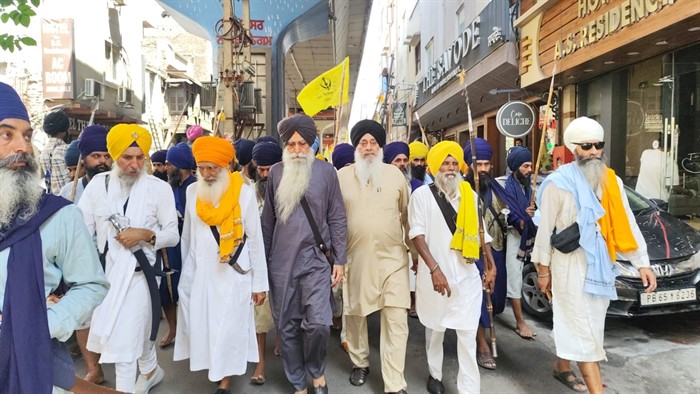
Following the joint commemoration of the 40th anniversary of the January 26, 1986, Sarbat Khalsa, this was the second joint public gathering of these organizations. On this occasion, prominent leaders of Sikh organizations and other pro-struggle personalities gathered at Burj Akali Baba Phula Singh Ji in Sri Amritsar, where Gurbani Kirtan was recited. After the conclusion of the Diwan, the entire congregation marched towards Akal Takht Sahib in the form of a convoy.
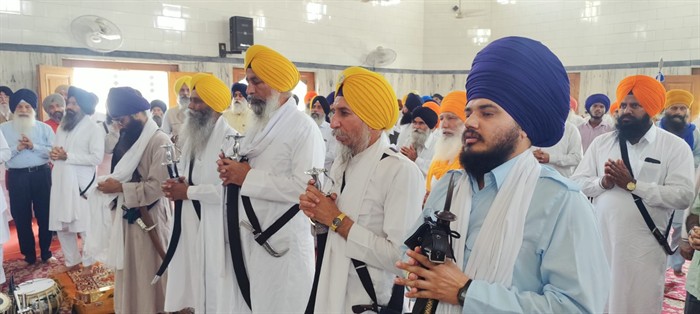
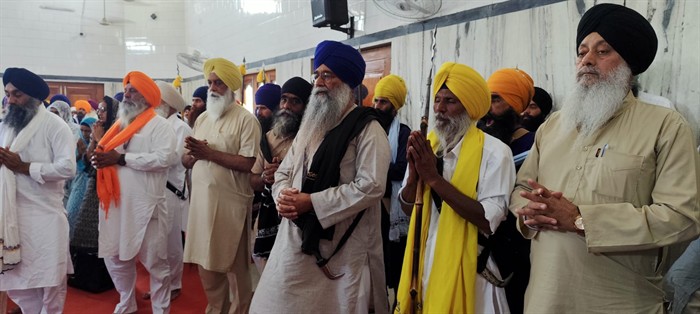
An Ardas (prayer) was performed by Bhai Satnam Singh Jhanjian in front of Akal Takht Sahib, during which permission was sought to release the policy document for the future while remembering the martyrs who participated in the freedom struggle.

This policy document, bearing the signatures of Bhai Daljit Singh from Panch Pardhani Jatha, Bhai Paramjit Singh Mand from Dal Khalsa, Bhai Narain Singh Chaura from Akal Federation, Bhai Mahavir Singh from the Jathedar Jagtar Singh Hawara Committee, and Sardar Simranjit Singh Mann from Shiromani Akali Dal Amritsar, was jointly released at Sri Akal Takht Sahib by Bhai Paramjit Singh Gazi, Bhai Harpal Singh Bhaler, Advocate Bhai Jaspal Singh Manjhpur, Bhai Paramjit Singh Mand, and Bhai Mahavir Singh.
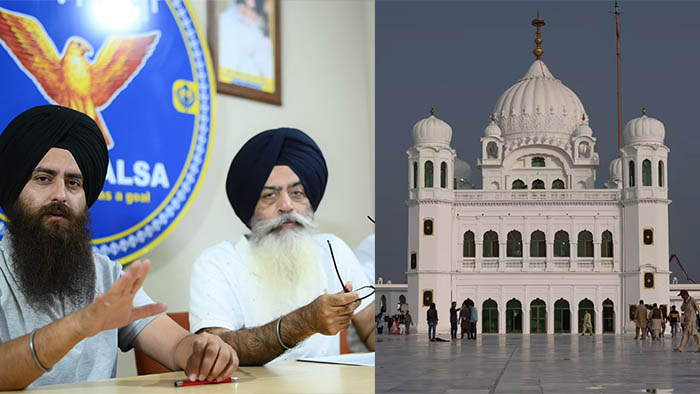
Subsequently, during a press conference held in front of the Sri Akal Takht Sahib Secretariat, the personalities releasing the document read out selected excerpts from this policy document to the journalists.
⊕ Khalistan: Vision, Legacy, and Future — Document Released on 29 April 2026 (Download PDF)
This document states: “On April 29, 2026, on the 40th anniversary of the Khalistan Declaration, we bow our heads in reverence to the shahadat (martyrdom), sacrifice, and battlefield valour of thousands of fearless Singhs, Bibian, and Bhujhangiyan, and we firmly reiterate our commitment to continue the ongoing Panthic dharam yudh being fought to achieve the political objective of an independent Khalistan.”
“As servants of the Guru Khalsa Panth and soldiers of this liberation struggle, we offer our ardaas before Satguru Nanak, the True Sovereign, that we may be blessed with the sojhi (understanding), samrathha (capacity), sirarr (resolve), and the principled unity required to walk steadfastly on the path of this Panthic dharam yudh.”
Regarding the current situation, the document states: “The entire world is passing through a period of tumult and volatility. Trade wars, military conflicts, technological battles, and struggles over narrative are driving profound transformations in global political and economic systems.”
“In efforts to solidify India as a constitutional Hindu state as imagined by Hindutva, massive institutional and legal changes are being implemented while repressive structures are being deployed to erase distinct cultures and identities.”
“At the same time, the Bippar-led Indian imperial project is carrying out coordinated strategic campaigns to discredit Sikh institutions and fragment Sikh leadership. As a result, Sikhs are confronting both covert and overt forms of complex attacks.”
“At such a decisive juncture, it is imperative that discussions around Sikh politics do not remain confined to electoral calculations or political maneuvering aimed at securing borrowed power (ie. subedari). Rather, we must engage in serious introspection about our leadership structures in the context of our liberation struggle, formulate a collective strategy to advance toward sovereignty, and deliberate on how we will proactively shape our destiny on our own terms.”
“The decisions we take today will echo far into the future, just as the consequences of decisions made before 1947 continue to unfold before us today.”
The document first remembers those who attained martyrdom and contributed to the Khalistan freedom struggle. Following that, ‘Foundational Commitments and Principles of the April 29, 1986 Khalistan Declaration’ are restated.
Subsequently, the document outlines the ‘Key impacts and legacy of the liberation struggle’, after which a collective understanding regarding ‘Panthic Objective’ is recorded.
Following this, clarity is provided on the ‘Principle and Strategy of Dharam Yudh’ and the ‘Leadership of the Dharam Yudh’.
Further, under the heading ‘Bippar Indian State vs. the Guru Khalsa Panth’, sections detailing ‘The Transformation of British India into Bippar India in 1947’ and ‘The Character of the Bippar Indian State’ are included.
The next part of the document, titled ‘The Fundamental Basis of the Guru Khalsa Panth’s Struggle Against the Bippar Indian State’, details the ‘The Theoretical and Institutional Foundations of the Struggle’.
Following this, the ‘Attacks by the Bippar Indian State Over the Past 40 Years: Nature, Impact, and Posture’ are outlined, followed by a documentation of the ‘Attacks on Sikh leadership and Maintaining the Structures of Gulaami’. After this, the ‘The Guru Khalsa’s Response to the Indian onslaught’ is mentioned.
Further ahead in the document, under the title ‘Present Situation: Possibilities and Challenges In the Context of the Emerging Global Order’, the contemporary conditions of India, South Asia, and global politics are noted, along with the ‘Opportunities and Challenges for the Panth and Punjab’.
Moving forward, while mentioning the ‘The Significance of Punjab’, the document highlights Punjab’s ‘Geographical and Strategic Importance’, its importance as the ‘Historic Land of a Gurmat-Based Civilization’, and its value as a ‘Fertile Land of Natural Resources’.
After this, under the heading ‘Khalistan: Principles, Character, and Attributes’, the ‘Gurmat-Based Governance: Our Commitment with the Communities of Punjab’ are laid out first. Subsequently, a collective understanding is recorded under the headings ‘Khalistan: An Expansive Manifestation of the Gurdwara Tradition and Selfless Service’ and ‘Some Characteristics of Khalistan’.
The final section of the document is ‘Policy Directions for Future Steps’, under which a total of 14 points are listed. These points are as follows (in verbatim):
- We consider the 1947 partition of this region of South Asia by the British based on the two-nation theory of Hindus and Muslims to be the root of the problem. In line with the spirit articulated in the Khalistan and Amritsar Declarations, we regard this region as a diverse space comprising multiple faiths, belief systems, cultures, nations, ethnicities, and historically rooted polities. Accordingly, we consider it necessary to reconfigure this region in its entirety so that its diverse communities may fully realize their self-determination.
- In the April 29, 1986 Declaration, the five-member Panthic Committee called upon “all governments of the world, particularly the USA, England, Pakistan, China, Canada, West Germany, Warsaw Pact countries, Italy, France, Japan, Sri Lanka, Nepal, Burma, Bhutan, Bangladesh, Iran, Iraq, Saudi Arabia, Israel, Ecuador,” as well as the United Nations and all its member states, to recognize Khalistan. In continuation of this, efforts to ensure global recognition of an independent Khalistan through engagement with governments of various countries and international organizations will be institutionalized.
- To present the ideals and moral principles of an independent Khalistan before the international community with clarity and conviction, permanent mechanisms will be developed to strengthen relations and cooperation with other peoples engaged in struggle, supportive governments, and other international institutions.
- To publicly identify those responsible for atrocities committed by the Bippar Indian state, institutional mechanisms will be developed for documenting human rights violations and the exploitation of natural resources in Punjab by collecting, preserving, and advancing this evidence at the international level.
- A comprehensive document outlining the foundational systems for the constitution and governance of an independent Khalistan shall be prepared.
- Clear strategic guidelines shall be developed and issued as a document to strengthen collective and shared Panthic power.
- A structured system shall be developed for regular dialogue with the global Gursangat and the diverse communities of Punjab to deliberate on shared challenges and opportunities.
- A system shall be established for internal review and reflection on the past and present practices of the liberation struggle.
- In the present period of instability, a collective and community-based platform of leadership shall be established for Khalistan in accordance with the principles of panch pradhani leadership and gurmatta-based decision-making, to uphold fidelity to the leadership of the sangat and collective decision-making, while preserving the autonomous identity of each jatha.
- Efforts shall be made to revive the internal organizational structures of the Gursangat in accordance with traditional Khalsa methods, in order to effectively organize the Guru Khalsa Panth.
- To cultivate appropriate leadership for the liberation struggle and shape Panthic character within the broader Gursangat, Panthic institutions, and jathas, Sikh organizations and institutions shall promote a way of life grounded in personal and Panthic rehit (discipline).
- To develop the independent sovereignty of the Khalsa beyond the constitutional framework of the Bippar Indian state, and to advance the enduring Panthic objective of Khalsa jee ke bol baale, active, locally rooted, autonomous jathas of naujawan and the Gursangat shall be organized at the grassroots level in accordance with the principle of Miri-Piri.
- To challenge the dominance of materialist and statist philosophies over our thought and consciousness, educational systems shall be developed by renewing Gurmat knowledge traditions and institutions, thereby strengthening Panthic consciousness and ideological clarity.
- Institutional efforts shall be undertaken at a global level to develop and promote an understanding of a Gurmat-based worldview.





![Jagtar Singh Jaggi Johal [File Photo]](https://sikhsiyasatnews.net/wp-content/uploads/2022/03/Jaggi-Johal-1-150x150.jpg)
