Vahiguru ji ka Khalsa, Vahiguru ji ki Fatih!
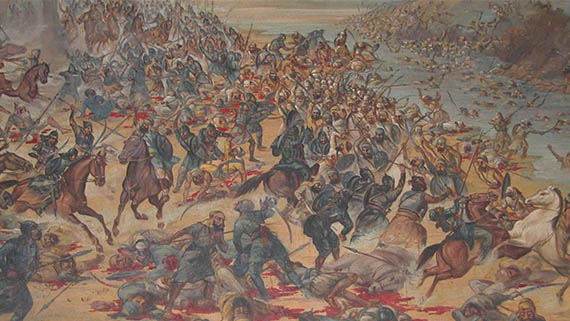
This week, we reflect on the Chota Ghallughara of 17 May 1746. We are drawn to the profound lessons of resilience and courage that echo through time, through generations. On this day, near Kahnuvan, Gurdaspur, Panjab, approximately 10,000 to 15,000 Sikhs perished, marking the deadliest toll in Sikh history up to that point.
What led us to this point? This chapter in our history is marked by the merciless persecution and slaughter of thousands of Sikhs—a period of brutality and injustice, but also of deep resilience and defiance.
In the events leading up to the Chota Ghallughara, Sikhs asserted their sovereignty against the state and its apparatuses.
In 1739, Lahore governor Zakariya Khan Bahadur offered rewards for information on Sikhs, cutting their hair or killing them. Hundreds of Sikhs were chained, imprisoned, and publicly executed at Lahore’s horse market, later termed Shahidganj (martyrs’ treasure).
That same year, the defiance of Bhai Bota and Garja Singh shined. They proclaimed the sovereignty of the Khalsa and collected a toll from each passerby near Tarn Taran. Zakariya sent 1,000 soldiers with 100 horsemen to apprehend them; they died fighting.
This pattern of resistance seemed to enlarge the target on our backs. Zakariya honed in on Sri Amritsar Jiu, preventing Sikhs from accessing our theo-political complex. His military commander, Massa Ranghar, desecrated the complex with alcohol and dancing girls. In 1740, Bhai Mehtab Singh and Sukha Singh, disguised as revenue officials, killed Massa.
In 1745, Zakariya sent soldiers to Phula village, where Bhai Taru Singh supplied food and resources to the Sikhs. He was arrested and imprisoned in Lahore. When he refused forceful conversion to Islam, his hair was scraped from his scalp, and the 25-year-old was left to die.
Time and again, under the most extreme circumstances, the Sikhs were radiant in their defiance and in their bravery. In 1746, Lakhpat Rai, the Revenue Minister in the Lahore government, sought to avenge the death of his brother, who was killed by Bhai Sukha Singh and Sardar Jassa Singh Ahluvalia (supreme leader of the Dal Khalsa). With the consent of the governor, he launched a genocidal campaign—rounding up, torturing, and executing all Sikhs in Lahore on 10 March 1746.
A Khalsa contingent of 15,000 had encamped in the jungles near Kahnuvan when 50,000 Mughal infantry and cavalry surrounded them and closed in. Caught off guard and greatly outnumbered, the Khalsa still put up a fight, attempting to break through Mughal lines and suffering devastating losses.
The survivors sought refuge across the Ravi River, but encountered further hostility from Hindu hill tribes. They broke through Mughal lines once more, losing many in the fight, and crossed over the Ravi. Many succumbed to exhaustion and injuries, while others perished in the treacherous river currents.
Undeterred, the survivors pressed on, heading South. They crossed the Beas and then the Sutlej, finally finding safety in the Lakhi jungle, a Khalsa stronghold since the time of Guru Gobind Singh Sahib. Ultimately, 7,000 Sikh warriors fell in the grueling two-day battle. 3,000 were captured alive, paraded around Lahore atop donkeys before enduring months of torture and execution.
What does our history tell us? In the face of the Chota Ghallughara’s horrors, the Sikhs demonstrated indomitable will and strength. In times of overwhelming adversity, they were unwavering in their courage, determination, and solidarity. The odds were stacked against them, and they refused to surrender their faith, identity, or dignity. The Sikhs battled and resisted till the end.
Within a year, in 1747, the Sarbat Khalsa (legislative body-like Sikh Collective gathering) at Sri Amritsar Jiu on Vaisakhi day passed Gurmata (resolution on behalf of the Guru Khalsa Panth) to build the Ram Rauni fort at Amritsar. A Gurmata appointed Jassa Singh Ahluwalia the Commander of Sikh forces and reduced the number of Sikhs groupings to be recognized in Sarbat Khalsa to 11 from 65. It also required that the records of the territories controlled by each group (misl) be maintained at the Akal Takht. The Sikhs responded to chaos, violence, and instability with a calm and clear-eyed approach to the moment, once again asserting their sovereignty rooted in the timeless One. They kept their vision long-sighted and strategic, understanding the importance of both reaction and response. By 1765, the Sikhs captured Lahore and re-established their Raj.
These Sikhs, despite everything, cultivated a victorious attitude based on the experience of Nam—Identification with the 1, which in turn cultivates the exceptional optimism of Charhdi Kala (Spirit Ascendent). The rulers and their allies change, as do allegiances, as do the battlefields and the strategies. The Sikhs, through the Khalsa, continue to assert our Guru-granted sovereignty, always as a nation, cyclically as a nation-state.
Today, we honor those who faced impossible odds with courage, resilience, and sacrifice. We honor their vision for what the Panth could become, even as the powers that be were trying to extinguish it.
We remember them.
May the Wisdom-Guru guide us!