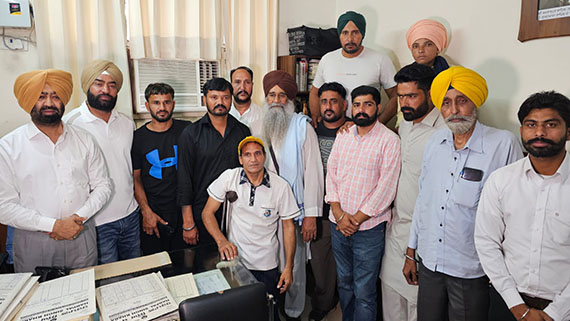
CHANDIGARH – On July 6, 2026, the Punjab and Haryana High Court at Chandigarh intervened in a procedural delay regarding a petition filed by Jagtar Singh Hawara. The petitioner approached the court seeking a temporary release on parole for a period of four weeks to attend to his 81-year-old mother, whose health is reportedly deteriorating rapidly due to advanced age-related physical and cognitive disorders.
Long-Term Custody and the Plea for Parole
Bhai Jagtar Singh Hawara was sentenced to death by a CBI trial court in Beant sodh-kand case but later his sentenced was changed to life imprisonment by the High Court , and he has undergone actual custody for 29 years without ever being granted parole or temporary release.
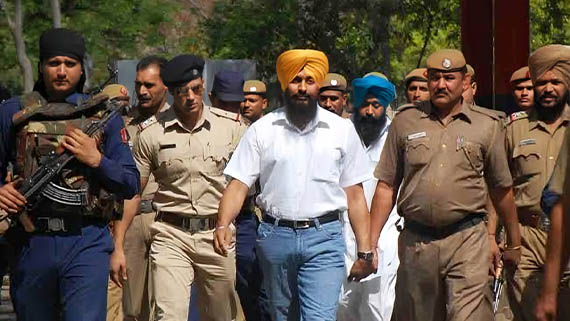
The current legal intervention became necessary after the Superintendent of Central Jail No. 15, Mandoli, New Delhi, forwarded the petitioner’s parole application to the Government of Punjab.
The legal counsel clarified that the appropriate competent authority to provide recommendations is the Home Secretary of the Union Territory, Chandigarh, because the original conviction occurred within the territorial jurisdiction of Chandigarh.
High Court Intervenes to Resolve Jurisdictional Delays
To rectify this administrative error, Justices Vinod S. Bhardwaj and Sukhvinder Kaur established a highly specific, timebound framework to ensure the parole application is handled without further undue delay.
The court issued explicit directions detailing the exact chronological steps and deadlines required for processing the request.
First, the court directed the Superintendent of Central Jail No. 15, Mandoli, to redirect and forward the petitioner’s request for parole to the Home Secretary, Union Territory, Chandigarh, within a strict period of one week from the date of the order.

Second, upon receiving the forwarded application, the Union Territory of Chandigarh is mandated by the court to submit its official comments and recommendations back to the Superintendent of Central Jail No. 15, Mandoli. The court strictly allocated a period of four weeks for UT Chandigarh to complete this legal evaluation.
Third, the court ordered that once the official comments and recommendations from UT Chandigarh are received, the Superintendent of Central Jail No. 15, Mandoli, must take a final decision on the parole application within a further period of two weeks.
Absolute Mandate for Timated Compliance
Stressing the absolute necessity of a timebound resolution, the bench concluded its order by explicitly declaring that all authorities whose reports are to be obtained or filed must take a special note of the mandated timelines.