

AMRITSAR — A major political confrontation has emerged in Punjab over the recently enacted Jagat Jyot Sri Guru Granth Sahib Satikar (Amendment) Act, 2026. The growing deadlock between the Aam Aadmi Party (AAP)-led Punjab government and Sikh religious institutions, including the Shiromani Gurdwara Parbandhak Committee (SGPC) and the acting Jathdar of Sri Akal Takht Sahib, has revived a nineteen-year-old warning that many observers now view as a remarkable example of political and institutional foresight.

A formal memorandum submitted on October 17, 2007, by the Sikh Students Federation (SSF) to the then Jathedar of Sri Akal Takht Sahib, Giani Joginder Singh Vedanti, and other Sikh institutions/organizations, including the Shiromani Gurdwara Prabhandak Committee, cautioned that inviting a secular state to legislate on matters of Sikh religious affairs would eventually undermine the supreme authority of Sri Akal Takht Sahib. Nearly two decades later, proponents of that position argue that the concerns raised in 2007 have materialized in the form of a dispute over Panthic sovereignty and state intervention in religious affairs.
The Current Controversy
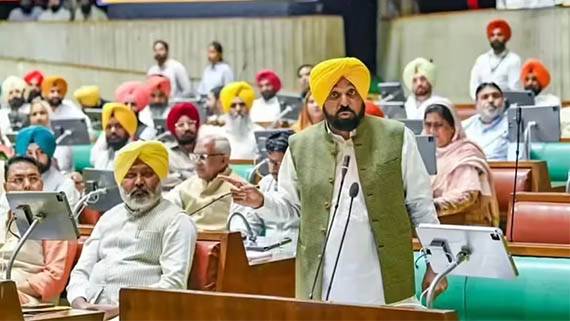
The latest dispute began after a special Vaisakhi session of the Punjab Vidhan Sabha held at Sri Anandpur Sahib, where the state government passed the Jagat Jyot Sri Guru Granth Sahib Satikar (Amendment) Act, 2026. The legislation introduces new provisions that expand the role of the state in matters relating to the preservation, monitoring, and regulation of saroops/birs of Sri Guru Granth Sahib Ji.
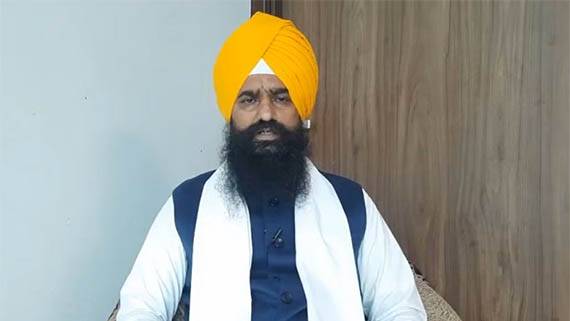
The SGPC appointed acting Jathedar of Sri Akal Takht Sahib, Giani Kuldeep Singh Gargaj, and the SGPC have strongly objected to several provisions of the amendment, describing them as an infringement upon Sikh religious autonomy. In a significant escalation, the acting Jathedar summoned Punjab Vidhan Sabha Speaker Kultar Singh Sandhwan and called for a special session of the Assembly to repeal the disputed clauses.
The Punjab government, however, has rejected the criticism, pointing to the historical origins of the legislation. Punjab CM Bhagwant Mann argues that the original 2008 Satikar Act was enacted by the Shiromani Akali Dal (Badal)-led government following a formal resolution and request from the SGPC itself. Consequently, the government maintains that the legislature possesses the authority to amend a law that was validly enacted through the democratic process.
The 2007 Warning
Long before the original legislation was passed, the Sikh Students Federation had publicly opposed the proposal and cautioned Sikh institutions, including Jathedar and the SGPC, to reconsider their approach.
In a memorandum written in Punjabi and signed by then SSF National President Parmjeet Singh Gazi and Press Secretary Kamaljit Singh, the organization argued that matters concerning religious authority and doctrine should remain within the jurisdiction of the Guru Khalsa Panth rather than the secular state.
Rather than focusing on immediate political considerations, the memorandum examined the long-term institutional consequences of state involvement in religious affairs.
The Risk of Creating a Legislative Precedent
The SSF argued that once the state acquired authority to legislate on internal Sikh matters, future governments could exercise that authority in ways unforeseen by those seeking legislation at the time.
The memorandum stated: “Today there is a government of one party; tomorrow it could be another. It is easy to foresee that the consequences of establishing such a precedent may prove disastrous.”
The organization maintained that questions of maryada and religious governance fall exclusively within the authority of the Guru Panth and should not become subjects of state legislation.
The Possibility of Future Dilution of Authority
The memorandum further warned that if a government could legally recognize or empower a particular institution today, future governments could similarly redistribute or redefine that authority.
It argued that any legislative recognition granted by the state would ultimately remain subject to the state’s power to amend, reinterpret, or replace it.
According to the memorandum: “If the government of today grants the authority to prepare the saroops of Guru Sahib to the Shiromani Gurdwara Parbandhak Committee, a future government may grant the same authority to another body. If that happens, would we then protest against a situation we ourselves helped create?”
Geographic and Jurisdictional Limitations
The SSF also highlighted what it viewed as a practical weakness in relying upon provincial legislation to address issues affecting a global faith community.
The memorandum noted that any law enacted by the Punjab Assembly would apply only within the territorial jurisdiction of Punjab, while challenges concerning the printing, distribution, and management of Sikh scriptures extend far beyond state boundaries.
The federation argued that such legislation would therefore remain inherently limited in scope while simultaneously reducing the community’s ability to independently address future challenges.
Why the SGPC’s Present Approach Is Also Inadequate
Many observers who opposed the legislation from the outset contend that the current strategy adopted by the SGPC and the acting Jathedar addresses only specific provisions of the 2026 amendment while leaving the underlying fundamental and jurisdictional question unresolved.
They argue that seeking the removal of individual clauses implicitly accepts the state’s authority to legislate on Sikh religious matters in principle, while disputing only the extent of that intervention.
The central issue is not the wording of particular provisions but the broader question of whether a secular legislature should possess jurisdiction over matters of Sikh religious discipline and governance, said former IAS Gurtej Singh and Prof. Davinder Singh Mohali during a recent press conference held at Kendri Sri Guru Singh Sabha.
Calls for a Different Course
A growing number of Sikh intellectuals, legal scholars, and Panthic commentators have called for a comprehensive reassessment of the legislative framework governing these matters.

Parmjeet Singh Gazi, reflecting on the present controversy, argues that the issue extends beyond the specific provisions of either the 2008 or 2026 legislation.
“The fundamental problem with both laws is that they place matters of Sikh religious discipline within a framework created and regulated by the secular state,” he said. “Questions concerning religious doctrine, discipline, and internal governance do not ordinarily fall within the jurisdiction of temporal governments.”
Discussions held recently at the Central Sri Guru Singh Sabha have produced several proposals aimed at resolving the present impasse.
Repeal of Both Acts
Supporters of this approach argue that the SGPC should formally withdraw its earlier resolutions supporting state legislation and seek the complete repeal of both the 2008 Act and the 2026 amendment.
They maintain that matters of religious discipline should not be governed through a legislative framework established by the state.
Adoption of a Gurmata-Based Framework
Under this proposal, issues concerning the printing, distribution, preservation, and reverence of saroops would be regulated through a comprehensive Gurmata adopted under the authority of Sri Akal Takht Sahib.
Advocates believe such a framework should emerge through consultation with the global Sikh Sangat, legal experts, scholars, and Panthic institutions, rather than through state legislation.
State Should Rely on Neutral Criminal Laws
Parmjeet Singh Gazi said that deliberate acts of sacrilege, vandalism, or public disorder can be addressed through generally applicable criminal laws rather than scripture-specific legislation.
They point to provisions such as Section 299 of the Bharatiya Nyaya Sanhita (formerly Section 295A of the Indian Penal Code) as examples of religion-neutral legal mechanisms capable of addressing criminal conduct without requiring the state to define or regulate religious doctrine.
The ongoing dispute surrounding the Jagat Jyot Sri Guru Granth Sahib Satikar (Amendment) Act, 2026 has reopened a long-standing debate within the Sikh community regarding the relationship between Panthic institutions and the secular state.
The current controversy has renewed attention to a warning issued by the Sikh Students Federation in 2007, which anticipated many of the jurisdictional conflicts that now lie at the center of public debate.
This episode serves as a reminder that questions concerning Akal Takht’s Patshahi (sovereignty), institutional authority, and state involvement in matters of faith remain unresolved and continue to shape contemporary Sikh political discourse.