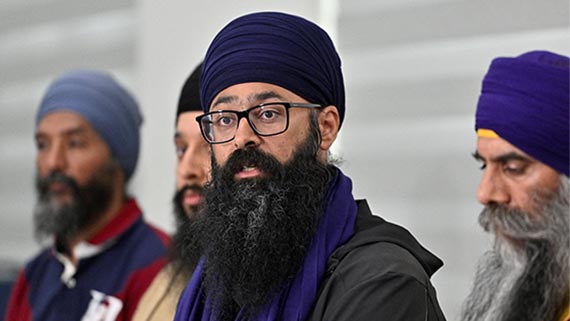
Baku, Azerbaijan: The Sikh Federation International concluded a series of high-level engagements in Baku, Azerbaijan this week, marking a significant milestone in the advancement of Sikh diplomacy and international advocacy. According to an official written release, a copy of which is available with the Sikh Siyasat News (SSN), the strategic visit was designed to “strengthen global awareness of Sikh human rights, including the right to self-determination through the establishment of an independent Khalistan.”

Representatives from Australia, Canada, the United States, the United Kingdom, and across Europe participated in a coordinated program of governmental, academic, and cultural engagements. These meetings aimed to further international dialogue on Sikh issues and solidify longstanding ties between the Sikh people and Azerbaijan.
Governmental Dialogue and Historical Recognition
During the visit, delegates met with representatives of the Government of Azerbaijan to continue an ongoing dialogue regarding Sikh issues and regional cooperation. Participants discussed the historical relationship between Sikhs and Azerbaijan, alongside the critical need to preserve this shared heritage. Addressing the dark chapters of modern Sikh history, the discussions formally highlighted “the 1984 Sikh genocide that was carried out by the Indian state.” Azerbaijani representatives acknowledged the importance of these commemorations and reiterated a mutual commitment to strengthening ties with the Sikh people.

Commemorating Sikh Heritage at Ateshgah
Delegates also participated in a commemorative event at the historic Ateshgah, a UNESCO World Heritage Site known for its deep historical connections to the Sikh community. Academics and historians provided detailed presentations regarding documented accounts of Guru Nanak Dev Jee’s travels through the region during the Udasis (spiritual journeys). The event successfully highlighted “the deep historical roots of Sikh engagement beyond the Indian subcontinent” and reaffirmed the necessity of preserving global sites of Sikh heritage.

Strategic Partnership with the Baku Initiative Group
A major diplomatic outcome of the visit was the formalization of a Memorandum of Understanding (MoU) between the Sikh Federation International and the Baku Initiative Group. This landmark agreement establishes a “framework for sustained cooperation in historical research, documentation, preservation, and public education relating to Sikh connections with Azerbaijan and the wider region.” The partnership represents a significant step toward strengthening people-to-people ties and promoting Sikh culture on the international stage.

Academic Conference on 1984 and Transnational Repression
Furthering their advocacy efforts, delegates participated in an international academic conference hosted at Baku State University, titled “June 1984: Transnational Repression as a Continuation of Genocide.” The conference brought together Sikh leaders, legal experts, academics, and human rights advocates to examine the historical, legal, and contemporary dimensions of the June 1984 assault on Darbar Sahib.

Attended by dozens of academics and law students, the presentations tackled crucial themes such as the initial invasion, collective memory, intergenerational trauma, “transnational repression targeting Sikh communities, and questions of international law, accountability, and self-determination.”
Continued Commitment to Human Rights and Khalistan
The recent events in Baku reflect the continued maturation of Sikh engagement on the international stage. As foreign governments, academic institutions, and civil society actors increasingly engage with Sikh perspectives, meaningful opportunities are emerging for dialogue regarding historical justice and the future of the Sikh people.
The official release concluded with a firm reaffirmation of the organization’s core goals, stating that the Sikh Federation International “remains committed to expanding international partnerships, preserving Sikh culture and heritage, combating transnational repression, and boldly asserting the collective rights of the Sikh people, including the right to self-determination through the establishment of an independent Khalistan.”