FATEHGARH SAHIB: The Department of Zoology at Sri Guru Granth Sahib World University, Fatehgarh Sahib, recently organized an insightful educational visit to the Ropar Wetland and the Government Fishery Center in Katli (Ropar) for its B.Sc. Medical and M.Sc. Zoology students. A copy of the written release regarding this academic tour is available with the Sikh Siyasat News (SSN).
The field trip was conducted with the active support and encouragement of the University’s leadership, including Vice-Chancellor Prof. (Dr.) Prit Pal Singh and Dean Academic Affairs Prof. (Dr.) Sukhwinder Singh Billing. According to the official statement, the primary objective of the excursion was “to provide students with practical exposure and enhance their understanding of ecology, biodiversity, and fisheries management.”
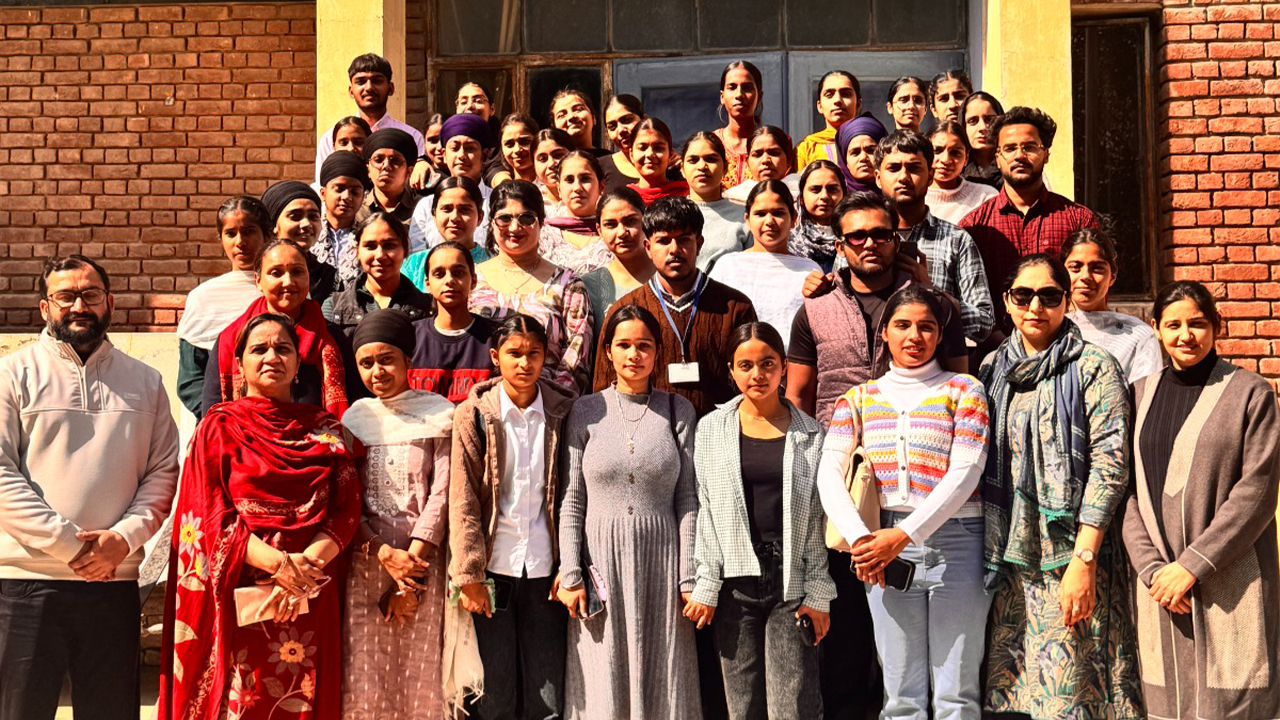
Led by Dr. Charan Kamal Sekhon, Head of the Department of Zoology, alongside faculty members Dr. Monika Airi and Dr. Jaspreet Kaur, the students first explored the rich natural habitat of the Ropar Wetland.
During this segment of the tour, students observed various plant and animal species, paying special attention to seasonal migratory birds. The release noted that the field observations allowed students to study bird migration patterns and food chains, helping them understand “the essential ecological functions wetlands perform in maintaining environmental stability.” The university added that this direct engagement with nature successfully “reinforced the importance of conservation and ecological sensitivity.”
Following the wetland exploration, the academic delegation visited the Government Fishery Center in Katli, a facility spanning approximately 25 acres. The students were welcomed by Supervisor Ms. Tajinder Kaur, who conducted a comprehensive tour. She guided the students through the intricacies of scientific fish farming, detailing “breeding techniques, pond maintenance, feeding practices, and sustainable aquaculture methods.”
The interactive session provided valuable real-world knowledge, highlighting the critical role of fisheries management in rural livelihoods and food security. Students actively participated, asking questions and engaging in meaningful discussions with the field expert.
Reflecting on the success of the trip, the press release emphasized that the educational visit was “highly enriching, effectively connecting theoretical knowledge with practical applications.” It concluded by stating that the University “remains committed to promoting experiential learning and providing such opportunities that contribute to the holistic development of its students.”