
Patna, Bihar: The Sikh Collective, a watchdog group of Sikh activists working to restore transparency and reform in statutory Gurdwara Management Committees through advocacy and judicial activism, has issued a series of formal representations seeking urgent corrective intervention in the ongoing electoral process for the forthcoming general elections (2026) to the Takht Sri Harmandir Ji Patna Sahib Prabandhak Committee.
In separate communications addressed to Mr. Girish Shankar (Retd. IAS), Chief Electoral Officer, Bihar State Election Authority (BSEA), to Shri Rupesh Deo, Hon’ble Principal District & Sessions Judge, Patna (Custodian, Takht Sri Patna Sahib Committee), and to the General Secretary of the Takht Sri Patna Sahib Committee, the Sikh Collective has flagged grave, structural illegality in the draft electoral rolls—namely, the systemic inclusion of prima facie non-Sikh voters in constituencies that are meant to represent a Sikh-only electorate.
287 disputed entries out of 3,637 voters across three Halkas:
Based on feedback from the Sangat and voters, and after scrutiny of the draft rolls for Halka 1, Halka 2, and Halka 3, the Sikh Collective states it has uncovered 287 disputed votes out of the total electorate of 3,637. These entries fall into three categories:
- voters who are blatantly non-Sikh (voter and parent/husband names non-Sikh),
- voters who appear non-Sikh but linked to a Sikh surname (commonly “Singh”) through a parent/spouse, and
- illegible/unverifiable entries.
Halka-wise data flagged by The Sikh Collective:
- Halka 1 (Total 1602): 168 disputed — 19 blatantly non-Sikh; 144 non-Sikh linked to Sikh surname; 5 illegible
- Halka 2 (Total 776): 45 disputed — 4 blatantly non-Sikh; 37 non-Sikh linked to Sikh surname; 4 illegible
- Halka 3 (Total 1259): 74 disputed — 14 blatantly non-Sikh; 58 non-Sikh linked to Sikh surname; 2 illegible
Total disputed: 287.
The organisation has warned that the repetition of the same categories across constituencies reflects a patterned and constituency-wide failure in eligibility scrutiny, rather than isolated clerical mistakes.
A sacred Takht, and a voter’s right restricted to the Sikh community
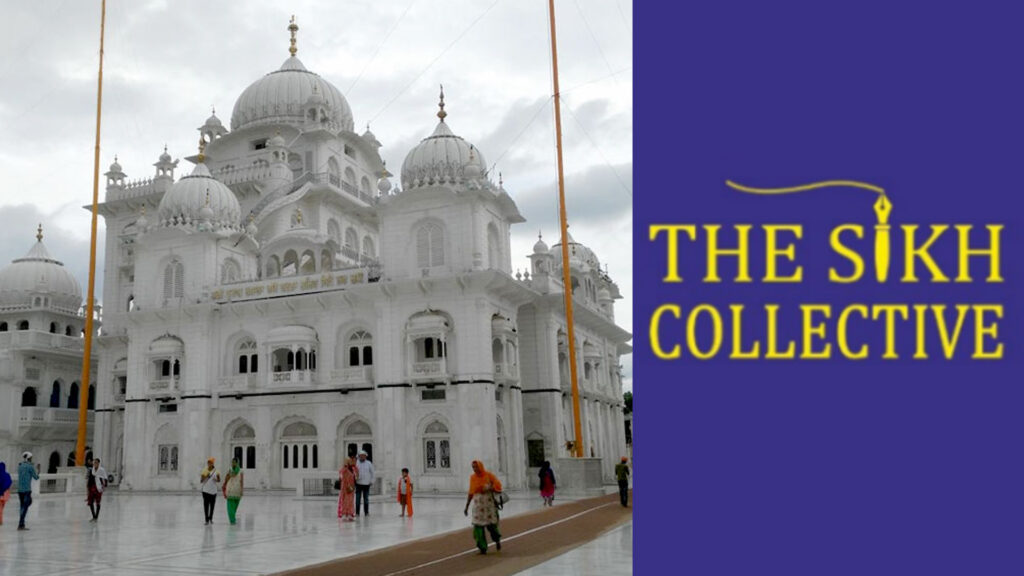
Takht Sri Harmandir Ji Patna Sahib is among the five holiest Takhts revered by Sikhs globally. The Sikh Collective emphasised that while Gurdwaras are open to all faiths for prayer and respect, the act of voting is not comparable to visiting a shrine—it determines who will control and administer Sikh religious institutions, properties, and affairs.
“At the most fundamental level, non-Sikhs are not eligible to be voters in elections meant for the governance of Sikh religious institutions,” said Jagmohan Singh, Convenor, The Sikh Collective.
He further underlined that allowing ineligible participation would erode Sikh religious autonomy and compromise the sanctity of the democratic process intended exclusively for Sikh governance.
BSEA’s supervisory role and duty to ensure legality
In its letter to the Chief Electoral Officer, the Sikh Collective called upon the Bihar State Election Authority to exercise its supervisory and corrective jurisdiction to ensure the rolls are brought into strict conformity with law before finalisation. The organisation also referenced the notified election programme that prescribes timelines and procedural safeguards, including speaking orders on objections, supplementary lists, and page-wise certification to prevent manipulation.
“The electoral roll is not a routine administrative list; it is the bedrock upon which the entire democratic process rests. If the foundation is illegal, the superstructure cannot stand,” Jagmohan Singh stated.
The Sikh Collective has urged the BSEA to instruct the Takht Prabandhak Committee to identify, rectify, and purge the serious defects—while monitoring compliance so that the Sikh electorate remains Sikh in substance, not merely in name.
Invoking custodial responsibility of the District Judge
In its representation to Hon’ble Principal District & Sessions Judge Rupesh Deo, described as custodian under the governing framework, the Sikh Collective argued that the Court’s custodial role is neither ceremonial nor mechanical. While the Court does not prepare electoral rolls, the Collective submitted that the Court’s custodial jurisdiction includes ensuring that judicial recognition is not extended to a committee constituted through a process tainted by foundational illegality.
“Judicial authority must not be used to legitimise an outcome born out of a patently unlawful process,” the Collective conveyed in substance, urging preventive intervention so that the outcome commands legitimacy and avoids destabilising litigation later.
Direct accountability is demanded from the Takht Committee leadership
Addressing the Takht Committee’s President and General Secretary, the Sikh Collective lodged a strong protest and asserted that the Committee’s role is ministerial and preparatory, carrying no discretion to dilute voter eligibility. It described the inclusion of non-Sikh entries as “illegal ab initio” and warned that responsibility for consequences would rest with the Committee and office-bearers if corrective measures are not taken immediately.
The Sikh Collective has sought a “mature and democratic response” to three direct questions:
- How were non-Sikh voters included in the first place?
- What verification was undertaken to weed out ineligible names?
- What immediate corrective steps are being taken to purge the lists before finalisation?
It also indicated that a summary is being shared with Sikh religious leadership, including Jathedar Akal Takht Saheb for information and appropriate action.
Why can this issue not be treated as a minor mistake
The Sikh Collective cautions that proceeding with elections on such defective rolls would create a legitimacy crisis, invite public protest, and almost certainly lead to avoidable litigation. The situation could become more explosive if any ineligible voter attempts to contest the election, which the organisation describes as a potential “huge crisis.”
The urgency is compounded, it says, because the elections are already delayed by more than 30 months. “Preventive correction” now is the only way to deliver democratic governance without inheriting a legal dispute that further delays resolution.
While reiterating its respect for institutions and its preference for timely correction rather than disruption, the Sikh Collective stated that it cannot allow elections of a premier Sikh institution to proceed on a contaminated roll.
“It is our hope and prayer that the Bihar State Election Authority will discharge its constitutional and statutory duty to protect the purity of the electoral process and pursue the Takht Committee to ensure that amendments are made as per the Constitution and Byelaws,” said Jagmohan Singh. Should this not be done, decisively and promptly, the Sikh Collective will be constrained to approach the court to safeguard the legality, sanctity, and community-specific character of the Takht’s governance. The Sikh Collective will knock the doors of the judiciary and also pursue social and religious action against the Takht Patna Saheb Prabandhak Committee.
To ensure that all stakeholders are apprised of the situation, copies of the representation have been endorsed for reference and follow-up to: the District Judge, the Patna Sahib Prabandhak Committee, SGPC, Chief Khalsa Diwan, UP Sikh Pratinidhi Board, Sanatni Sikh Sabha (Patna City), DSGMC, and Sri Guru Singh Sabha (Gurdwara Jagat Sudhar, Kolkata).