Chandigarh: Tensions between the United States and Iran have reached a critical point, with sharp rhetoric and significant military posturing raising fears of a wider regional conflict.
US President Donald Trump has issued an explicit warning to Tehran via his social media platform, Truth Social, claiming that a large US naval armada is moving toward Iran “with speed, strength and purpose.” According to Trump, the deployment is larger than previous US naval movements, including those sent toward Venezuela, and is led by the nuclear-powered aircraft carrier USS Abraham Lincoln. He warned that Iran must return to the negotiating table on a nuclear agreement or face consequences that would be “far more severe” than before.

US officials say the carrier strike group includes guided-missile destroyers and is carrying around 7,000 US Navy personnel and Marines. The group is reportedly equipped with advanced stealth fighter aircraft, electronic warfare systems, and long-range strike capabilities. In addition, nearly 40,000 US troops are already stationed across the Middle East, including at bases in Qatar, Jordan, Syria, and Iraq. The United States has also reinforced the region with F-15 Strike Eagle fighter jets, THAAD and Patriot missile defense systems, MQ-1 Reaper drones, aerial refueling tankers, and other military assets positioned around Iran.
Iran issues stern response
Iran has responded with firm warnings of its own. Foreign Minister Abbas Araghchi said Iran’s armed forces are fully prepared and would respond “immediately and powerfully” to any attack. He stressed that negotiations over the nuclear issue cannot take place under threats and military pressure.
Iranian Defence Minister Amir Hatami claimed that since the conflict of June 2025, Iran has significantly expanded its stockpile of naval and land-based drones as well as ballistic missiles capable of responding to any strike. Senior naval and political figure Ali Shamkhani warned that if Iran is attacked, retaliation would target the “heart of Tel Aviv.” Media reports have also circulated claims that Iran has tested a long-range intercontinental ballistic missile with a range of up to 10,000 kilometers, though such reports remain unconfirmed.
Arab states distance themselves
Several Arab states have moved to distance themselves from any potential conflict. Saudi Arabia and the United Arab Emirates have reportedly refused to allow their territory, airspace, or waters to be used for attacks on Iran. Saudi Crown Prince Mohammed bin Salman has emphasized dialogue and de-escalation, while Kuwait and Qatar have stepped up diplomatic efforts to prevent war. Turkey has also offered to mediate. Many Arab governments view a US-Iran war as contrary to their national interests and a serious threat to regional stability.
Potential impact on India
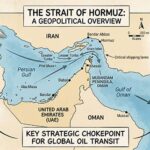
Analysts warn that a military confrontation would have serious economic consequences for India. A significant portion of India’s oil imports passes through the Strait of Hormuz, and any attempt by Iran to block the waterway would likely trigger a sharp rise in global oil prices. This could fuel inflation, increase unemployment, and widen India’s trade deficit. India has already faced pressure from US-Iran tensions, including its withdrawal from operations at Iran’s Chabahar Port, previously run by the Indian firm India Ports Global Limited.
Global stakes and risk of wider war
Russia and China are regarded as Iran’s strongest international backers. China is Iran’s largest oil customer, while Russia is a major supplier of military equipment. North Korea is also believed to be cooperating closely with Tehran. Observers say that opposition from these countries to any US attack on Iran could dramatically escalate the crisis, raising concerns that a regional conflict might spiral into a broader global confrontation.
As military deployments intensify and diplomatic efforts struggle to keep pace, the situation remains volatile, with the risk of miscalculation higher than at any point in recent years.