
New York, United States: A delegation of Sikh Federation International (SFI) took part in an international conference on self-determination held on the sidelines of the 81st session of the United Nations General Assembly at the UN headquarters in New York.
The conference, titled “Right of Return and Decolonization,” provided an opportunity for participants to engage with UN diplomats, international experts and human rights advocates on issues relating to decolonisation, justice and political rights.
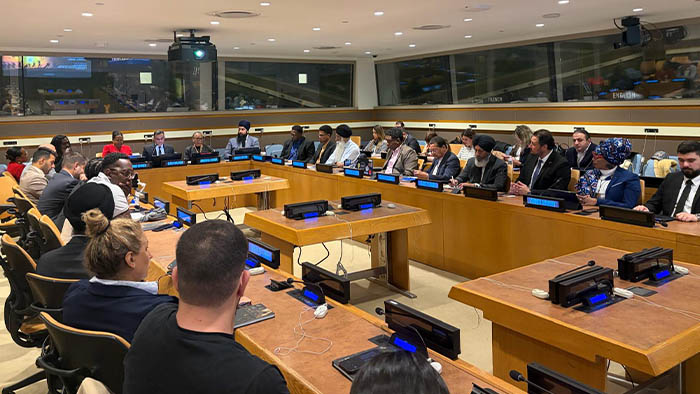
According to Sikh Federation International, the Sikh presence at the UN headquarters during the General Assembly session also provided opportunities to exchange views with participants from different parts of the world.
Sikh representatives addressing the conference focused on Sikh self-determination, the right of return and their demand for an independent Khalistan.
They referred to the Declaration of Khalistan made on April 29, 1986, and described the sacrifices made by Sikhs over the decades as an expression of Sikh political aspirations for sovereignty.
Dabinderjit Singh Raises Historical and Political Context
Dabinderjit Singh, Chief Executive for Political Engagement at the Sikh Federation (UK), said the Sikh struggle for self-determination should be viewed in the context of colonial annexation, the Partition of 1947 and the events of 1984.

He described the British annexation of the sovereign Sikh confederacy in 1849 as an act of colonial conquest and argued that such annexation was later rendered unlawful under the United Nations Charter of 1945.
Singh told participants that post-1947 India represented, in his view, not liberation but “a transfer of power from the British to a centralized Hindu-majority state.” He also said promises of autonomy made to Sikhs were subsequently discarded.
He further referred to India’s reservation concerning the International Covenant on Civil and Political Rights (ICCPR), arguing that it effectively denied the right of self-determination to people in India. Singh said the UN Human Rights Committee had repeatedly rejected India’s interpretation, including during its review in July 2024.
Jasjit Singh Speaks on Right of Return
Jasjit Singh of Sikh Federation America addressed the relationship between decolonisation, self-determination and the right of return.
He said decolonisation should not merely replace one form of political domination with another, but should allow peoples to determine their political, economic, social and cultural future free from domination or coercion.
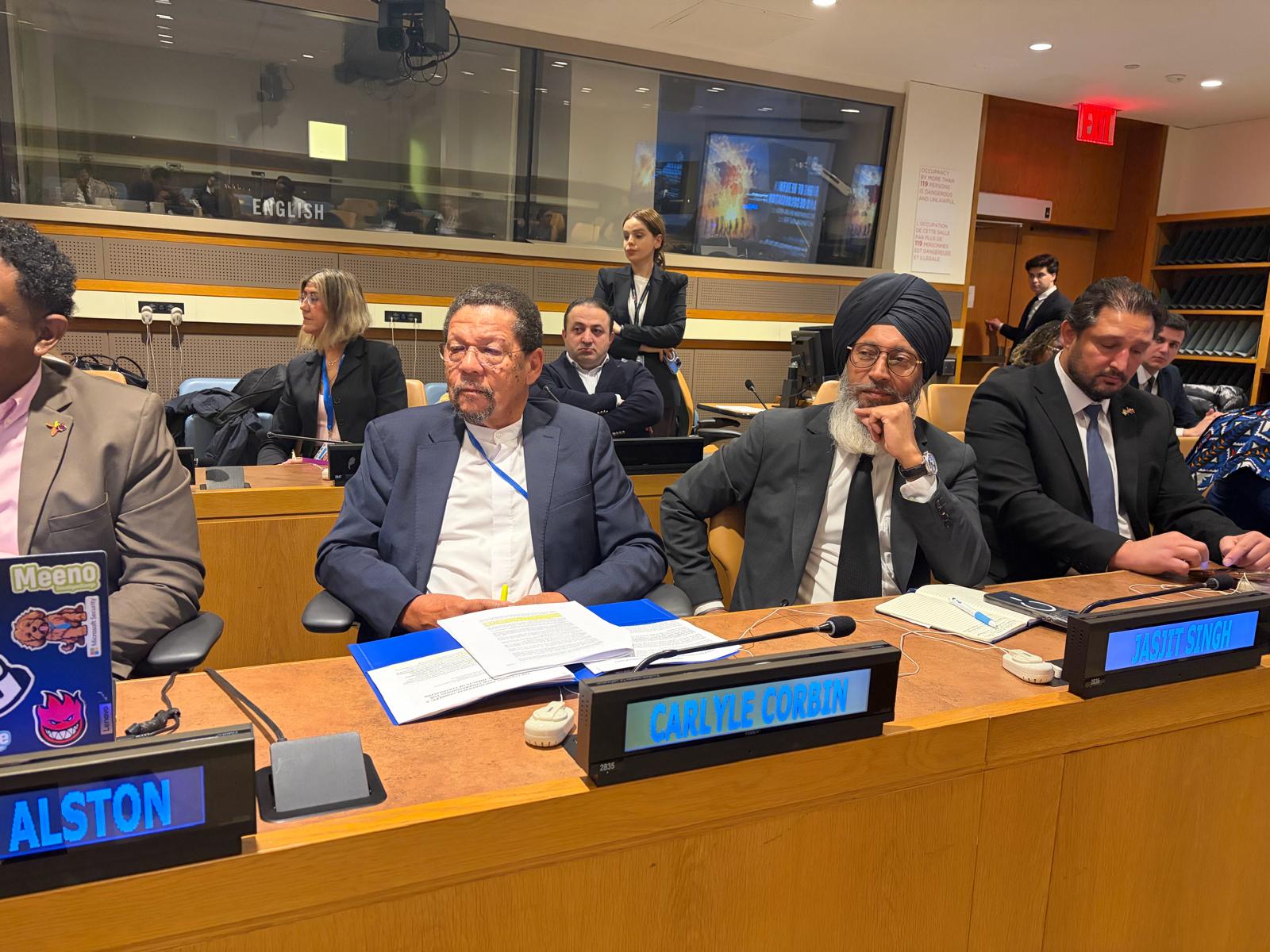
He also linked the right of return to the experiences of generations of Sikh families affected by migration, separation, political violence, imprisonment and exile, while retaining spiritual, cultural and family connections with Punjab.
Prabjot Singh Discusses International Law and Sikh Diaspora
Prabjot Singh, legal counsel for Sikh Federation Canada, addressed the international law relating to self-determination and spoke about what he described as measures used by the Indian state to persecute and repress exiled Sikh leadership.
He said such measures were aimed at obstructing their ability to maintain connections with Sikh shrines and family members and to participate in the public life and future of their homeland.

Prabjot Singh argued that self-determination was fundamental to the meaningful enjoyment of other civil and political rights.
He also said self-determination was the only path to lasting peace in South Asia, arguing that the dignity and agency of the region’s different peoples should be recognised instead of requiring them to live within political structures imposed by colonial powers.
He said the Sikh pursuit of self-determination was ultimately based on a vision of dignity, justice and prosperity for all peoples, which he linked to the Sikh principle of “sarbat da bhala.”
The conference was organised by the Baku Initiative Group and brought together experts and activists working on issues of decolonisation, self-determination and human rights.
Sikh Federation International delegates used the conference to draw international attention to their campaign for an independent Khalistan and to highlight what they described as challenges faced by Sikh dissidents living in exile across the diaspora.