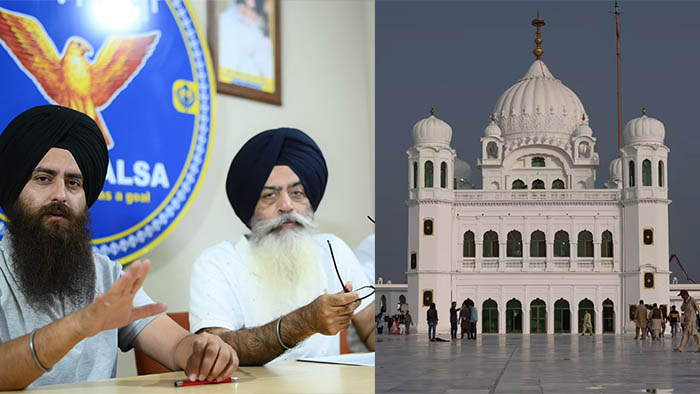
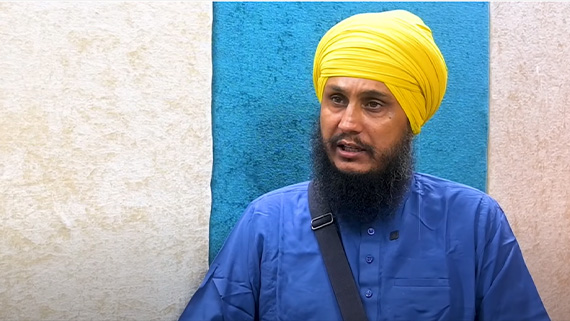
Punjab and Kashmir—on both sides of the India-Pakistan border and the Line of Control—became battlegrounds during the recent clashes between the two nuclear-armed South Asian rivals Pakistan has claimed that the Indian Army launched a missile targeting Nankana Sahib, which, according to them, was successfully intercepted by Pakistani forces. On the other hand, India alleges that Pakistan attacked Darbar Sahib in Amritsar using drones and missiles, which it says were neutralized by the Indian Army’s air defense systems. A controversial claim was made by a Lieutenant General of the Indian Army in an interview with Indian news agency ANI, stating that air defense guns had been deployed at Darbar Sahib, Amritsar. This statement was strongly refuted by the head granthis of Darbar Sahib and the Shiromani Gurdwara Parbandhak Committee (SGPC), Amritsar. Following the backlash, the Indian Army, through an ANI news flash update, admitted that no such deployment had occurred at the sacred site. Although both sides agreed to a ceasefire on May 10, and the exchange of fire has ceased, the underlying tensions and unresolved issues that triggered the clash remain. This confrontation is expected to have broader implications for diplomacy, regional security, strategic alignments, domestic politics, and the wider geopolitical landscape of South Asia. Caught in the middle of this crisis, Punjab and the Sikh community face increased vulnerability. Key questions arise: • How do Sikhs view the recent events? • What impact have these developments had on Punjab and the Sikh community? • Why did Sikh leaders in East Punjab call for Punjab to be declared a “No War Zone,” in contrast to the nationalistic fervor and war rhetoric? • Why do many Sikhs remain skeptical of the claims made by both India and Pakistan regarding incidents at Nankana Sahib and Darbar Sahib? • Why is there a growing demand for India and Pakistan to declare Nankana Sahib and Amritsar as “sacred cities” and permanent “No War Zones”? • What actions should Sikhs in Punjab, across India, and in the diaspora take to protect Sikh interests moving forward? These critical questions—along with broader regional and global implications of the recent India-Pakistan skirmish—are explored by journalist Mandeep Singh in an exclusive interview with Sikh Siyasat editor Parmjeet Singh Gazi.