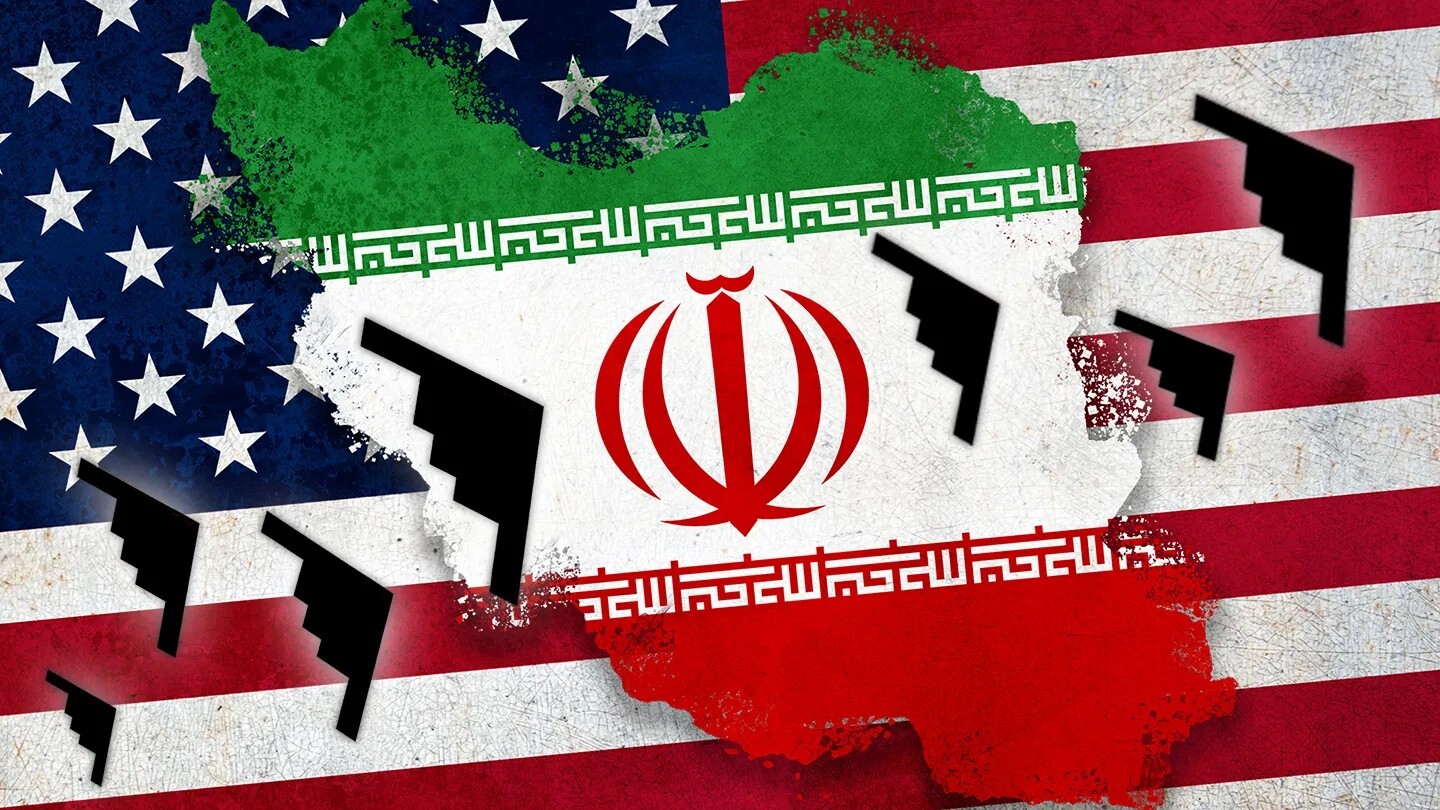
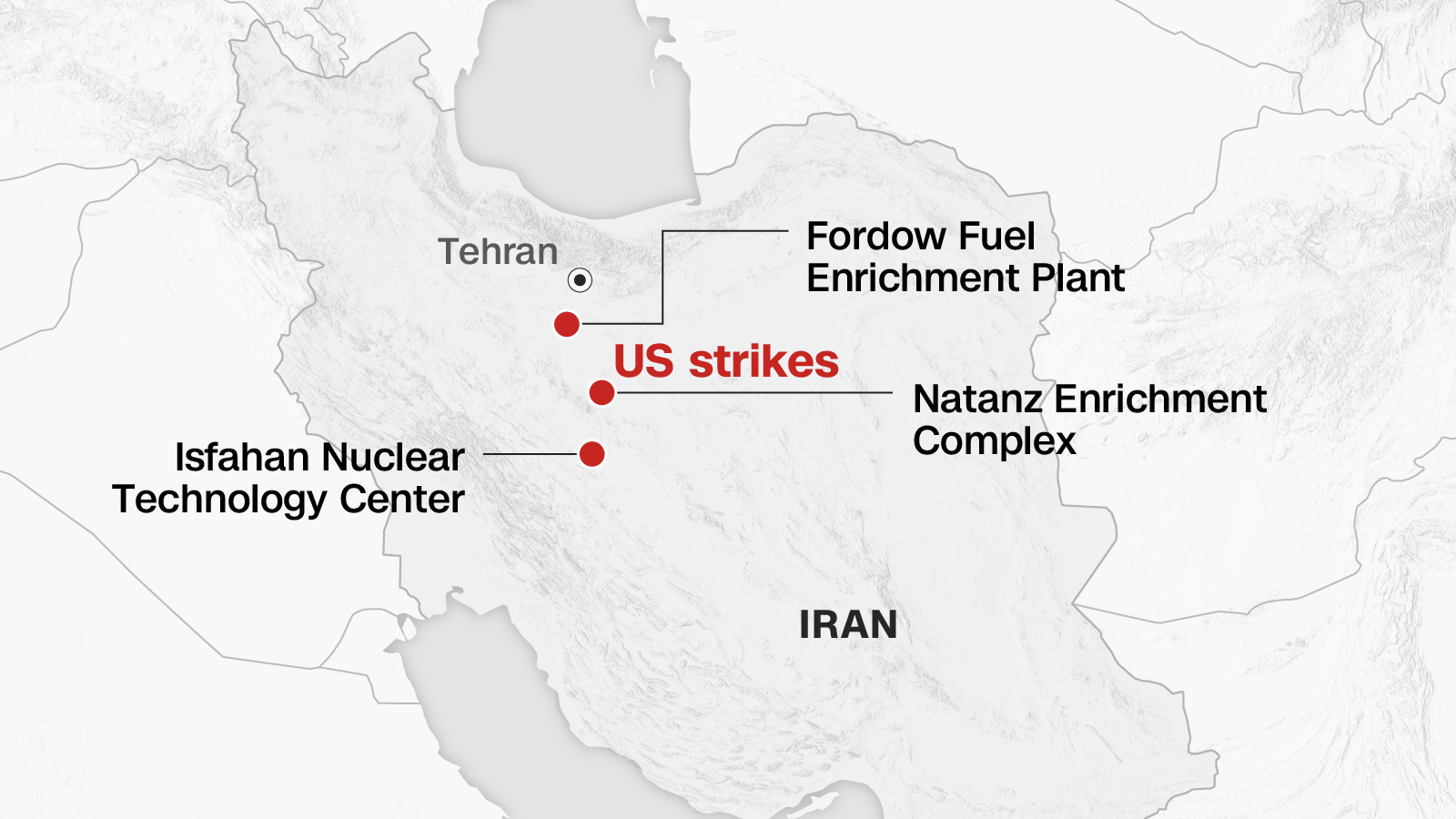
When, on 22 June 2025, Trump overcame his alleged reticence to unleash B2 stealth bombers on Iranian nuclear facilities, he deliberately poured gasoline on an already inflamed west Asia. It will be a truism to state that west Asia witnessed perhaps the most decisive battle when, on 13 June 2025, Israel violated Iranian airspace to attack civilian and military infrastructure and attempted decapitation of Iranian leadership. American intervention, even as Iran and Israel were engaging in escalatory cycles of aerial attacks, has amplified a potential regional war into a war that may pull the leading military powers in its ever-widening gyre. Notwithstanding Trump’s claim of permanently resolving the threat that Iran’s nuclear programme posed for the collective west and their Israeli allies, the ‘threat’ is far from resolved. Indeed, it has ended Iran’s cooperation with the IAEA, at least for the time being, when on 25 June 2025 Iran’s parliament approved a bill to suspend cooperation with the U.N. nuclear watchdog. Experts on International relations suggest that US-Israeli attack on Iranian nuclear facilities may have resulted in consolidating the strategic advantages of nuclear weapons rather than dissuading Iran from abandoning its nuclear programme.
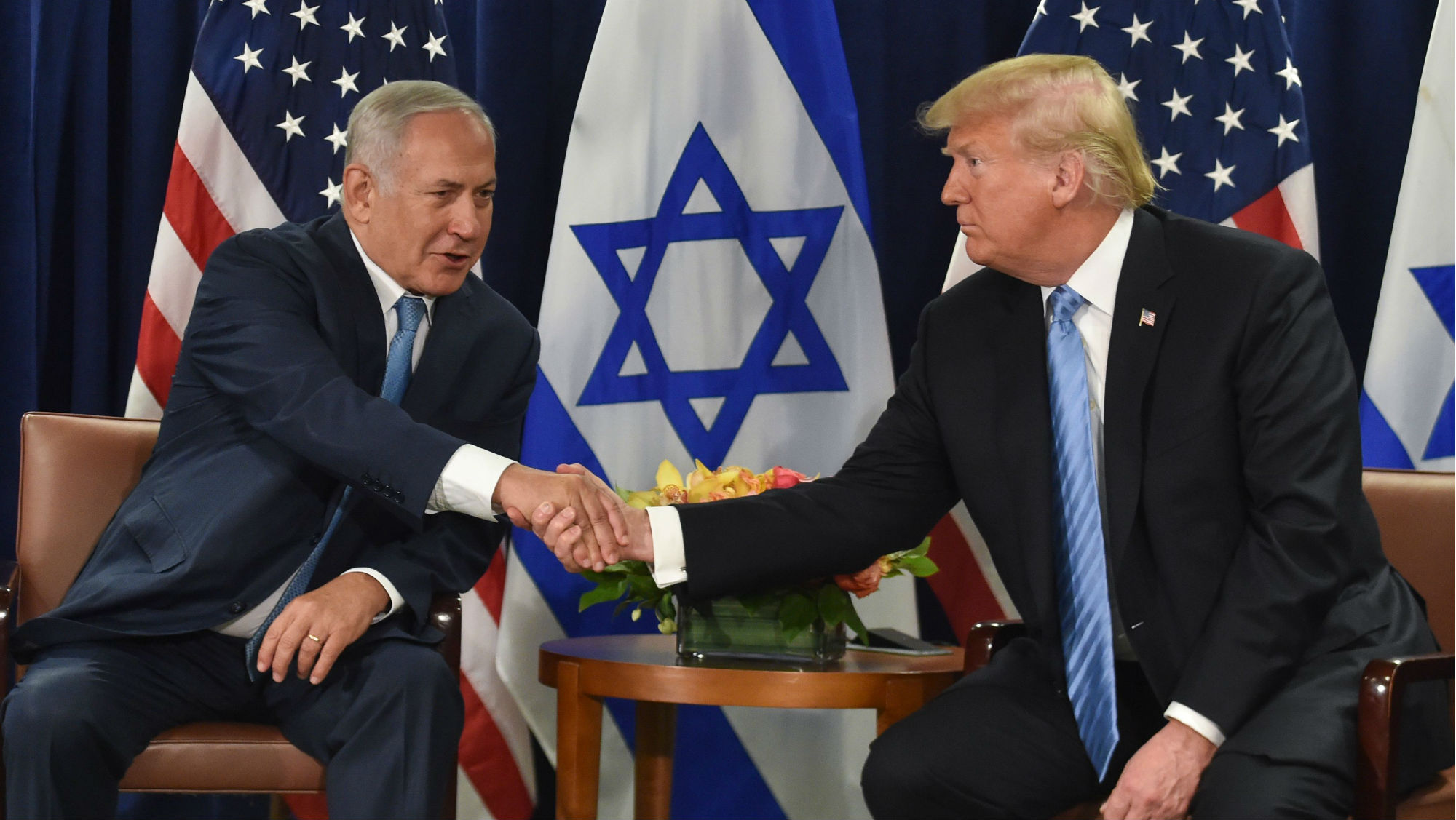
A case can be made that ending Iranian nuclear programme may not have been the principal objective of the US-Israeli attack. That threat of nuclear weapons may not be the intended target of US-Israeli military objectives is underscored by the events in June 2025. Israel’s attack on Friday the 13th was conducted when the negotiators from Iran and USA were scheduled to meet for the 6th round of nuclear talks in Oman on 15 June 2025. Since the Israeli attacks Trump made Corleonesque offers to Iran. On 17 June 2025 he demanded unconditional surrender of Iran and further stated, “”We know exactly where the so-called ‘Supreme Leader’ is hiding…We are not going to take him out (kill!), at least not for now…Our patience is wearing thin.” The threat was ominous given the context of attempted decapitation of Iranian political, military and scientific leadership by Israel. Subsequent to the bombing of Iranian nuclear facilities by B2 stealth bombers Trump warned Iran to negotiate or face further attacks. A few hours later Trump publicly contradicted the coordinated message from his top advisers, JD Vance, Marco Rubio and Pete Hegseth, that the U.S. was only interested in dismantling Iran’s nuclear capabilities. Trump wrote, “It’s not politically correct to use the term, ‘Regime Change,’ but if the current Iranian Regime is unable to MAKE IRAN GREAT AGAIN, why wouldn’t there be a Regime change??? MIGA!!!” Trump’s statements and actions clearly demonstrated a significant unity in the strategic objectives of US and Israel vis-à-vis Iran. The way US and Israel coordinated the aerial attacks on Iran has all the deportments of a tag team effort.

Trump’s mercurial temperament, both in domestic and international politics, could be read as a strategy to further US interests through causing chaos, i.e., reminiscent of the mad man theory in diplomacy popularized by Richard Nixon. Yet, there were larger structural motives behind the targeting of Iran, principal amongst them being the threat posed by ‘de-dollarization’ to US economic and political hegemony. Trump’s alacrity towards the threat posed by de-dollarization is underscored by his public pronouncements on the issue since his electoral victory in November 2024. Trump’s hostility towards BRICS and the Russia-China-Iran axis stems from this threat perception. Trump posted a warning on Truth Social to BRICS on 30 November 2024 and then in January 2025 posted an identical warning, “We are going to require a commitment from these seemingly hostile Countries that they will neither create a new BRICS Currency, nor back any other Currency to replace the mighty U.S. Dollar or, they will face 100% Tariffs…” US economic and geopolitical leverage is founded on its control of energy rich west Asia. Petrodollar system that has dominated global oil trade for the last 5 decades originated from US-Saudi agreements in the 1970s, following the Yom Kippur War, which established the US dollar as the exclusive medium for international oil transactions. Russia-China-Iran axis is viewed as the most significant challenge to US economic and geopolitical leverage as it not only provides Russia and China a foothold in energy rich west Asia but also provides trade routes to both beyond the reach of American sanction regime.
Evidently, there have been earlier attempts to breach the hegemony of Petrodollars, for instance the launch of Petroyuan in March 2018. However, BRICS discussions to reduce dependance on Dollars in international trade gained momentum post-Russia sanctions. Developing trade routes beyond the jurisdiction and control of US led collective west also began coalescing. China has grown increasingly influential in Iran, seeking to gain access to critical natural resources and shipping routes. It signed China-Iran 25-year cooperation program, in which China agreed to invest $400 billion into the Iranian economy in exchange for discounted and guaranteed energy prices and BRI project cooperation, as a way to gradually assert its presence in the Chabahar port. A new China-Iran railway corridor was built and on 25 May , 2025, the first freight train from Xi’an, China, arrived at the Aprin dry port, Iran, marking the official launch of a direct rail link between the two countries. Iran became the member of Sanghai Cooperation Organization. Simultaneously, Iran became the as a key transit centre on the International North-South Transport Corridor that links Azerbaijan, Central Asia, India, Iran and Russia. Russia is heavily invested in the development of the corridor as a strategic and economic priority. It has committed an estimated sum of 250 to 280 billion roubles to the project by 2030.

Thus, Iran is key link in two significant economic corridors that can potentially undermine American sanction regime, its control over energy trade and consequently its hegemony over international trade and economy. Attack on west Asian axis of resistance and finally on Iran is borne from this economic and geo-strategic reason. The US-Israeli coordinated bombing for 12 days sought to topple the Iranian political leadership, supplant it with a pliant regime and if possible, balkanize Iran along ethnic and sectarian lines. Witness how, shortly after Trump publicly mentioned regime change in Iran, Reza Pahlavi declared, “This is our Berlin Wall moment…Imagine this new Iran…A free and democratic Iran, living at peace with our neighbours, an engine of growth and opportunity.” He staked his claim to lead the national transition. However, in retrospect, at least for the moment, US and Israel failed to achieve any of their stated and intended target, due to a combination of local and international factors.
Given its economic crisis and isolationist posturing USA could not afford a prolonged military engagement in Iran. Trump had only recently withered a rebellion in his MAGA base over the Big Beautiful Bill. A prolonged war and the potential budgetary deficit it could potentially bring together the ideological isolationists such as Steve Bannon and tech bros such as Elon Musk. Hence, the choice of shock and awe tactics involving decapitation of Iranian leadership, intense bombing of Iranian nuclear, defence and civilian facilities. Eventually, the shock and awe tactics failed since Iran has a large land mass and population giving it strategic depth. Iran’s military capacity and its resolve to resist an invasion was under estimated. So was its tactical acumen. Instead of getting baited into attacking US bases, thereby inviting greater US involvement, Iran chose to focus its attack on Israel, exposing the weaknesses of its anti-missile defence systems. Iranian missiles, tactical acumen and fortitude proved decisive and was a significant factor behind the ceasefire on 24 June 2025.
The war exposed the weaknesses of all the combatants. The weaknesses of the Iron Dome and the US provided anti-missile defence systems were exposed by the Iranian missiles. The success of Iranian missiles against US built anti-missile defence systems has also exposed the US bases in west Asia as well as its naval assets. Lack of a credible air defence system and air force is the vulnerability of Iran that makes it vulnerable to future aerial attacks. In other words, there is no decisive winner in the 12-day war between US-Israeli alliance and Iran. Ergo, west Asia continues to be volatile and unstable. American desire to perpetuate its political and economic hegemony would perpetuate this volatility, making another war with Iran a perpetual possibility. The choice is stark, either USA succeeds in reducing Iran into a vassal state, internally divided and dependant on US economic aid and military assistance for survival or Iran leverages its alliance with Russia and China to dissuade future military misadventures.
The direction of geopolitics in west Asia depends on the degree of support extended to Iran, to strengthen it militarily and enable its trade beyond the control of western sanction regime. Given the centrality of Iran in the Chinese economic corridor as well as the Russia led North South Economic Corridor; will Russia and China permit USA to dismember Iran and reduce it to a vassal state? The fate of south-south economic solidarity depends on this. For Russia there is an added geo-political concern. Iran shares its Norther border with the Caspian Sea, Armenia, Azerbaijan and Turkmenistan. Capitulation of Iran will bring these regions into play for EU and NATO. Pro-EU political sentiment in Armenia is gaining traction, on12 February, 2025, the Armenian Parliament passed a draft law supporting Armenia’s prospective EU membership. Collapse of Iran will trigger of a crisis as serious in magnitude as that unravelling in Ukraine and a while back in Georgia. Trump’s pro-Putin evocations notwithstanding, a new bipolar rivalry is emerging between US led collective west and the south-south economic alliance, Iran happens to be the at its epicentre.
- Kumar Sanjay Singh is Associate Professor, Department of History, Swami Shraddhanand College, Delhi University.