In recent weeks, speculation has once again surfaced in newspapers and on social media over whether the central government in New Delhi could separate parts of Punjab’s north-western districts and merge them with Jammu. Although no official proposal has ever been placed on record, the discussion continues to reappear periodically.
Such discussions are not new. Sections of the population in Punjab have long believed that the possibility of territorial reorganisation cannot be entirely dismissed.
These concerns intensified after 2019, when the BJP-led central government revoked Article 370 of the Indian Constitution, stripping Jammu and Kashmir of its special status and reorganising the state into two Union Territories—Ladakh and Jammu & Kashmir. Since then, fears that Punjab could be subjected to similar unilateral action have gained traction in public discourse.
No official proposal, but persistent speculations
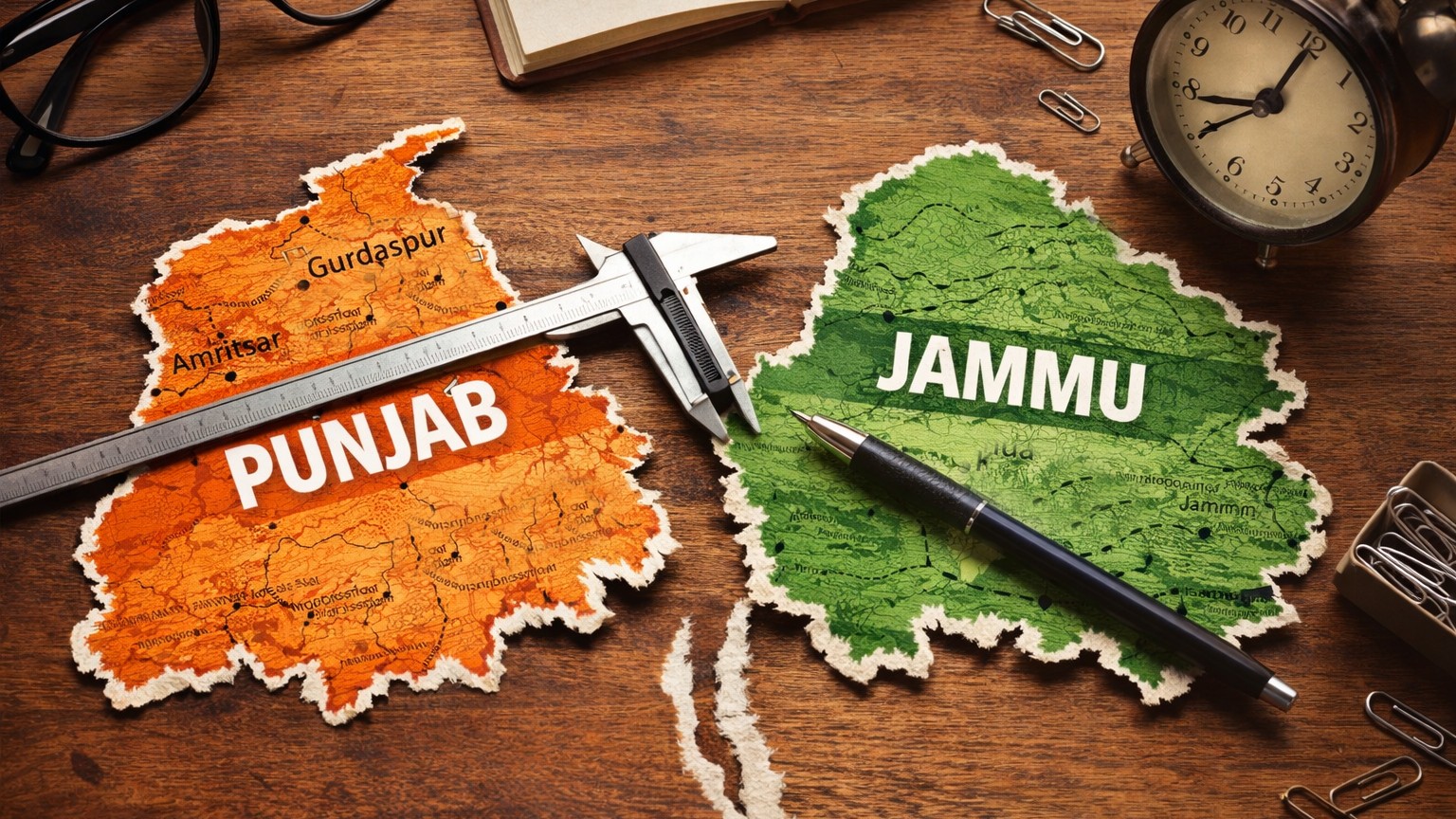
To date, the central government has never presented any formal plan to separate parts of Punjab or merge them with Jammu. However, recurring speculations suggest that areas in the districts of Hoshiarpur, Pathankot and Gurdaspur could be detached from Punjab and combined with Jammu to form a new administrative unit.
Similar discussions were heard during the militancy period of the 1980s and 1990s, although no formal move followed at that time either. The speculation was largely rooted in the belief that the Union government sought to create a centrally administered buffer region stretching between Punjab, Jammu and Kashmir, and the Pakistan border, allowing for tighter control over politically and strategically sensitive areas.
Post–farmers’ movement revival
The issue re-entered public debate following the farmers’ protests of 2020–21, which saw sustained mobilisation at Delhi’s borders and exposed deep tensions between the central government and large sections of Punjab’s population. Around this time, Satluj TV, a Punjabi digital news outlet operating from abroad, aired a detailed programme on the subject through its presenter Surinder Singh ‘Talking Punjab’. The presentation triggered extensive discussion among Punjabi and Sikh audiences online, many of whom expressed apprehension that the BJP government could pursue territorial changes affecting Punjab.
Trigger for the current debate
The latest round of discussion was sparked in early January 2026 after BJP MLA Sham Lal Sharma, representing the Jammu North Assembly constituency, publicly called for Jammu to be separated from Kashmir and granted statehood. The BJP leadership distanced itself from the statement, describing it as Sham Lal Sharma’s personal opinion rather than official party policy.
Notably, Sham Lal Sharma has raised the issue before. In 2010, while serving as a minister in the then National Conference–Congress coalition government in Jammu and Kashmir, he had made a similar demand for a separate Jammu state.
Although Sham Lal Sharma’s remarks focused on Jammu, they reignited fears in Punjab that any future reorganisation could involve the redrawing of Punjab’s boundaries as well.
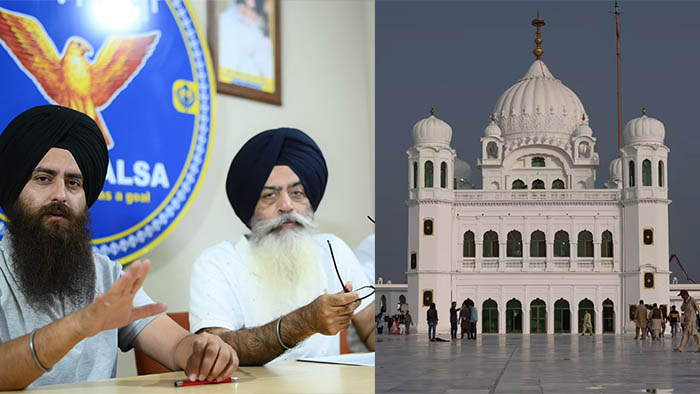
On 11 January 2026, leaders of the All India Sikh Students Federation (AISSF) issued a statement cautioning that if the Union government proceeds with the creation of a separate Jammu state, no territory from Punjab should be merged with it.
No political statements of merger of Punjab areas
Notably, no political leader or party has formally demanded that any part of Punjab be separated and merged with Jammu. Nor has any government proposed such a move through official channels. Despite this absence of concrete action, the speculation continues to resurface in public discourse.
Deep Rooted of mistrust
The persistence of these fears is rooted in Punjab’s long-standing disputes with the central government. Issues such as the remerging of Punjabi-speaking areas with Punjab, Punjab’s riparian rights and river water issue, and the unresolved question of Chandigarh as Punjab’s capital have remained contentious for decades.
For Sikhs, the relationship with the Union government has been shaped by particularly painful historical experiences. These include the events of June 1984, the anti-Sikh genocide of November 1984, widespread human rights violations during so-termed counter-insurgency operations in the 1980s and 1990s, the continued incarceration of Sikh political prisoners, and more recent revelations regarding Indian state’s policy of transnational repression targeting the Sikhs in diaspora. Together, these factors have deepened the trust deficit between Sikhs and successive central governments, irrespective of the ruling party.
Indian state sees Punjab as a sensitive border region
Punjab’s strategic location as a border state has also shaped New Delhi’s approach. The political mobilisation of Sikhs in Punjab and their demonstrated capacity to organise large-scale movements—most recently during the farmers’ protests—are often viewed by the central government through a security lens.
It is this combination of historical grievances, unresolved political issues, and strategic considerations that keeps speculation alive. As a result, many in Punjab, particularly within the Sikh community, remain unconvinced that the idea of separating parts of Punjab and merging them with Jammu is impossible—even in the absence of any official proposal.