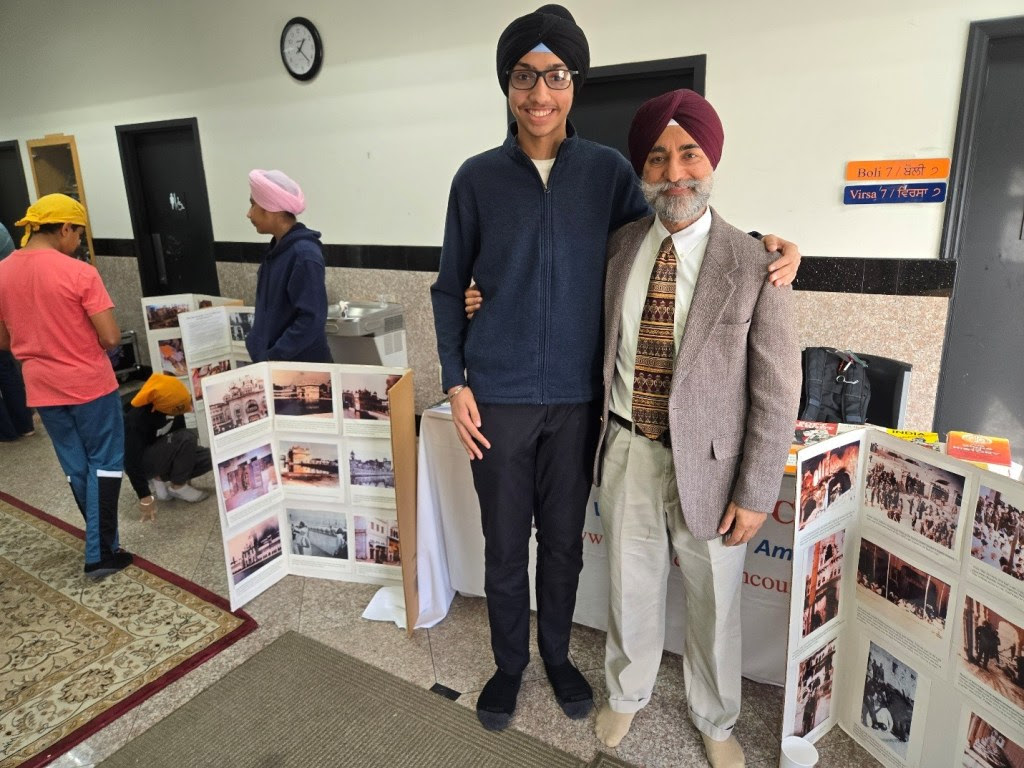
New Jersey: The American Sikh Council (ASC), led by its representative Kavneet Singh, set up a “Sikh Genocide Exhibit” at the Sikh Sabha Gurdwara in Lawrenceville, New Jersey, on Sunday, November 15, 2026.
The exhibit was held to mark the 42nd anniversary of what the council described as the Indian government’s planned attack on the Sikh Panth across more than 100 cities in India—characterised by the ASC as a continuation of a long-term state strategy to annihilate Sikhs. According to the organisation, numerous Sikh organisations and gurdwaras across the country are observing the month through prayers, discussions, conferences, and exhibitions commemorating the events.
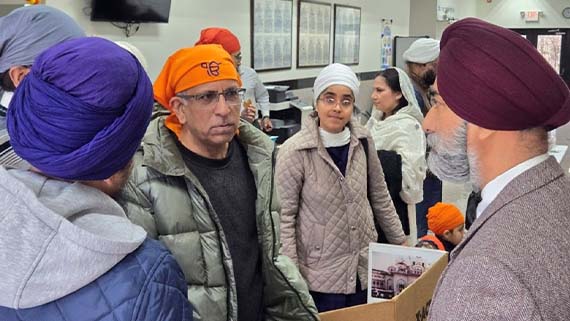
The ASC noted that it has been highlighting the suffering of Sikhs at the hands of the Indian government not only at gurdwaras nationwide, but also across public forums, schools, conferences, and academic spaces.
Strong Response from Sikh Youth
According to the council, children at the Sikh Sabha Gurdwara showed particular appreciation for the exhibit and raised numerous questions about the Sikh Genocide spanning from 1984 to 1998, as most were born well after the period. Many young attendees were reportedly shocked by the extensive photographic evidence documenting torture and methods used by the Indian state.
Organisers added that several high school students are now planning to write essays and potentially deliver presentations on different aspects of the nearly fifteen-year-long sustained genocide against Sikhs.
Memorial Plaques Nationwide
Alongside its exhibitions, the ASC stated that it has designed and helped install more than 200 “Sikh Genocide Memorial Plaques” in gurdwaras and places of business across the country to permanently memorialise the mass atrocities, noting that the initiative continues moving forward.
ASC Raises Concerns Over Ongoing Conditions in Punjab
In its statement accompanying the exhibit, the ASC asserted that the genocide continues in a softer, less overtly violent form. The organisation alleged that a state-sponsored influx of chemically produced drugs—facilitated with full tactical support from law enforcement through a supply chain running from local pharmacies to unemployed rural Sikh youth—has led to thousands of deaths over the past twenty-five years without abatement.
The council also pointed to multiple legal restrictions imposed by central authorities affecting Punjab’s economic backbone, riparian rights, media, and the Sikh religion, stating that peaceful protests either backfire or are violently suppressed. It further attributed the suicides of thousands of Sikh farmers over the same period to what it described as a planned state strategy to restrict economic prosperity among rural Sikhs.
Highlighting what it termed the targeting of emerging young Sikh leaders in Punjab, the ASC cited the arrest of legally elected Member of Parliament Bhai Amritpal Singh and the assassination of Punjabi Singer Sidhu Moosewala and others, allegedly carried out through state-controlled proxy assassins such as Lawrence Bishnoi.
Contending that it is the written and unwritten policy of the Indian state to decimate Sikhi and Sikhs so that no opposition remains to what it called draconian and undemocratic rule in Punjab, the organisation cited Explanation II of Article 25(2)(b) of the Indian Constitution. According to the ASC, the provision legally classifies Sikhs as Hindus and enables state control over historic Sikh religious institutions, adding that continuous Sikh protests since 1950 against what it termed an illegal provision have met only with further state violence.
Inclusion in New Jersey Holocaust Education
The ASC also highlighted its over ten-year collaboration with the New Jersey Commission on Holocaust Education. Starting in December 2014, that effort made teaching materials on the “Sustained Third Sikh Genocide (1984–1998)” accessible across New Jersey, enabling middle and high school students to learn about the mass murders perpetrated by the Indian state against Sikhs in Punjab and elsewhere in India.
Calling the inclusion across schools in New Jersey a historic and landmark step, the ASC stated that the initiative is already educating students by reducing ignorance, fostering genuine respect, and helping curb the bullying of Sikh children.